

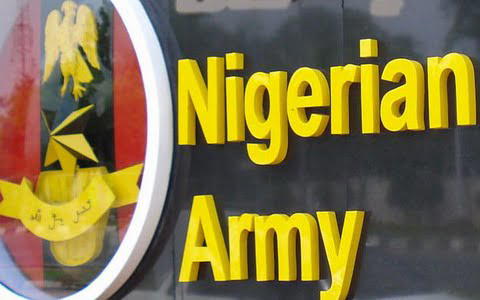

Nigeria's Military Dangerously Overstretched, Ex-Army Chief Warns; Calls for Security Overhaul
Translated from English, summarized and contextualized by DistantNews.
At a glance
Analysis
Named sources
Context piece
- Nigeria's military is dangerously overstretched by internal security operations, warns former Chief of Army Staff Lt. Gen. Tukur Yusuf Buratai.
- Buratai argues Nigeria cannot resolve its insecurity solely through military means, calling for a restructuring of the security architecture.
- He identifies poverty, unemployment, and weak governance as root causes of the persistent security crisis, which the military is increasingly burdened with.
Nigeria's military is stretched to its breaking point by relentless internal security operations, a stark warning issued by former Chief of Army Staff Lt. Gen. Tukur Yusuf Buratai. In a lecture reviewed as a "coherent doctrine-level security blueprint," Buratai challenged the nation's long-standing approach to insecurity, which relies heavily on deploying soldiers, launching operations, and acquiring weapons, only to face recurring attacks. He contends that Nigeria cannot "shoot its way out of insecurity" and advocates for a fundamental restructuring of the country's security apparatus. Buratai highlighted that the military has been drawn too deeply into domestic security, a role it was not designed for permanently. This intervention comes as Nigeria grapples with a complex web of threats, from Boko Haram and ISWAP in the Northeast to banditry and mass kidnappings in the Northwest, separatist violence in the Southeast, and oil theft in the Niger Delta. While the actors and geographies differ, Buratai identifies a common thread: a security crisis fueled by poverty, unemployment, underdevelopment, and weak governance. He emphasizes that insecurity is primarily a governance problem manifesting as a military emergency, stating, "The key threat is the system behind the gun, not the gun itself." The former army chief expressed deep concern over the military's involvement in over 32 routine internal operations nationwide, an "extraordinary burden" that detracts from its constitutional mandate of territorial defense. The Nigerian military has become the nation's default emergency response mechanism, highlighting a systemic issue that requires more than just military solutions.
The key threat is the system behind the gun, not the gun itself.
DistantNews Editorial
Originally published by ThisDay in English. Translated, summarized, and contextualized by our editorial team with added local perspective. Read our editorial standards.
More Stories


From Our Blog

How the Same Story Looks Different in Different Countries

What Gets Lost (and Found) When News Is Translated

The Critical Role of Diaspora Media in Global News

What Travellers Should Know About Countries with Restricted Press

A Digital Nomad's Guide to Following Local News
