


Nigeria's ports are strategic national assets, not just ship berthing points: Minister Oyetola
Translated from English, summarized and contextualized by DistantNews.
At a glance
News
Named sources
Context piece
- Nigeria's Minister of Marine and Blue Economy, Adegboyega Oyetola, stated that ports are crucial national assets for driving industrialization and economic growth.
- He emphasized that efficient ports are essential for the success of Special Economic Zones and attracting investment.
- Oyetola highlighted that modern ports should be evaluated on speed, reliability, and investor confidence, not just vessel volume.
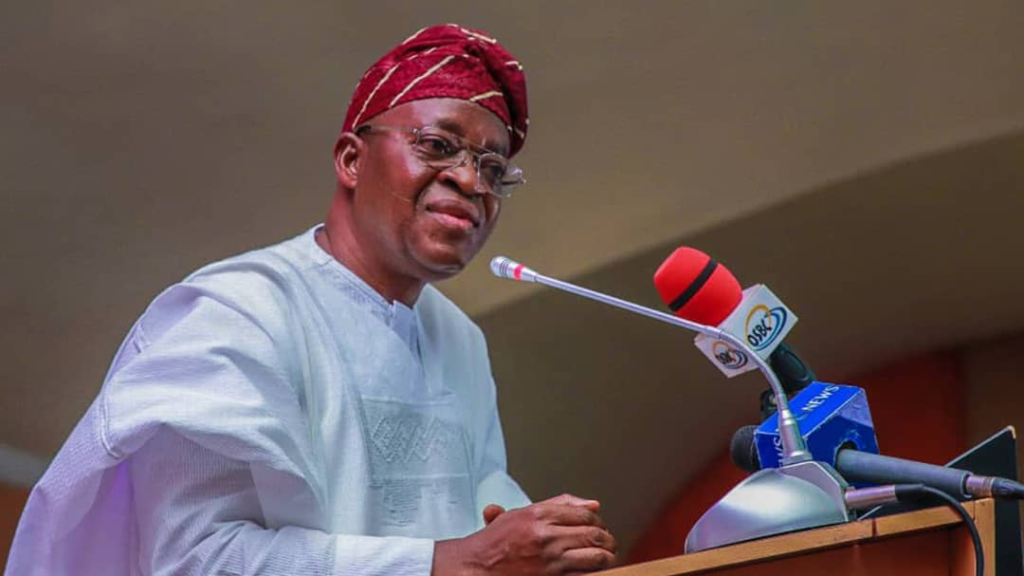
Nigeria's ports must be viewed as strategic national assets capable of driving industrialization, attracting investment, and accelerating economic growth, according to Adegboyega Oyetola, the Minister of Marine and Blue Economy. Speaking at the 26th Maritime Correspondents Organisation of Nigeria (MARCON) Conference in Port Harcourt, Oyetola, represented by Kenechi Okaeze, Manager of Rivers Port Complex, stressed that the nation's maritime economy aspirations hinge on port efficiency.
Our ports must be seen not simply as places where ships berth, but as strategic national assets capable of attracting investment, supporting manufacturing, expanding exports and ultimately accelerating economic growth.
"Our ports must be seen not simply as places where ships berth, but as strategic national assets capable of attracting investment, supporting manufacturing, expanding exports and ultimately accelerating economic growth," he stated. Drawing parallels with global trading nations like Rotterdam, Singapore, Shanghai, and Dubai, Oyetola noted their economic prosperity stemmed from deliberate investments in efficient transport and logistics systems. He asserted that Nigeria needs a similar approach for its Special Economic Zones (SEZs) to achieve their goals of attracting investment, promoting manufacturing, creating jobs, and diversifying the economy.
The minister underscored that the success of SEZs is intrinsically linked to the efficiency of their supporting ports. "A Special Economic Zone without an efficient port system is much like an airport without a runway. The vision may be compelling, but its potential can never be realised," he explained. Optimizing port infrastructure, he clarified, involves more than just physical expansion; it encompasses technology, connectivity, governance, operational efficiency, and competitiveness.
A Special Economic Zone without an efficient port system is much like an airport without a runway. The vision may be compelling, but its potential can never be realised.
Oyetola concluded by stating that modern ports are better judged by the speed of cargo clearance, service reliability, and investor confidence. "In today’s competitive trading environment, investors consider logistics costs, turnaround time, predictability and efficiency before deciding where to locate their businesses. Every unnecessary delay at the port increases logistics costs, weakens competitiveness and discourages investment," he said. He also mentioned the government's commitment to digital transformation through the Port Community System and improving channel management and dredging to enable Nigerian ports to handle larger vessels, reduce turnaround times, and lower business costs.
In today’s competitive trading environment, investors consider logistics costs, turnaround time, predictability and efficiency before deciding where to locate their businesses. Every unnecessary delay at the port increases logistics costs, weakens competitiveness and discourages investment.
DistantNews Editorial
Originally published by Vanguard in English. Translated, summarized, and contextualized by our editorial team with added local perspective. Read our editorial standards.
More Stories


From Our Blog

How the Same Story Looks Different in Different Countries

What Gets Lost (and Found) When News Is Translated

The Critical Role of Diaspora Media in Global News

What Travellers Should Know About Countries with Restricted Press

A Digital Nomad's Guide to Following Local News
