

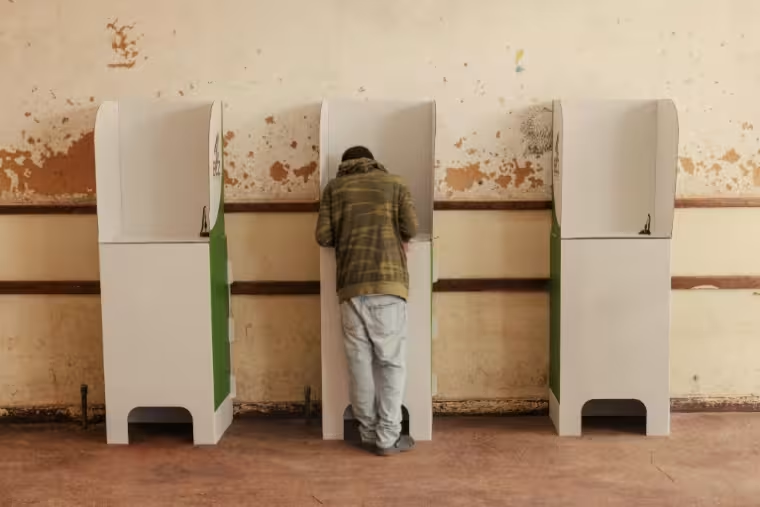
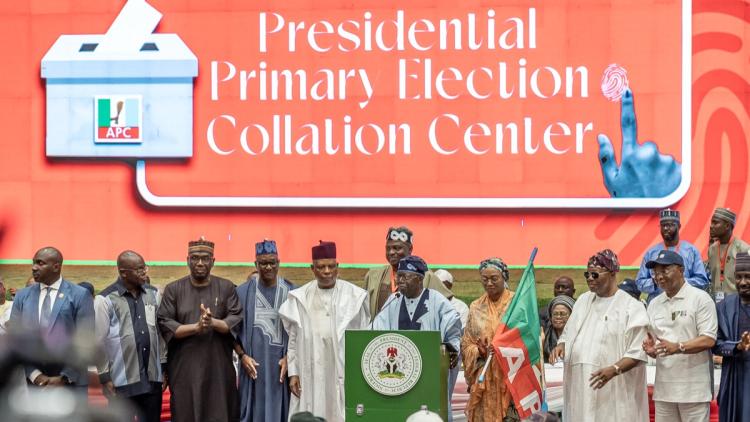
Nigeria's presidential campaign opens with Tinubu's mixed record facing voters
Translated from French, summarized and contextualized by DistantNews.
At a glance
News
Sources not specified
Context piece
- Nigeria's presidential and legislative election campaign officially began August 19, with 19 candidates vying for the presidency.
- Incumbent President Bola Ahmed Tinubu faces a challenging re-election bid, defending his first-term record amidst public dissatisfaction.
- Key reforms like ending fuel subsidies and currency devaluation are highlighted by his party, but economic and security concerns persist among voters.
Nigeria's campaign for the upcoming presidential and legislative elections, scheduled for January 16, officially commenced on August 19. Nineteen candidates, including three women, are competing in this extensive electoral marathon, aiming to sway over 100 million voters across the nation's vast territory. The presidential race requires candidates to secure at least 25% of the votes in 24 out of 36 states to win.
Incumbent President Bola Ahmed Tinubu is seeking a second term, positioning himself as the defender of his first four-year mandate. His party, the All Progressives Congress (APC), has emphasized major policies and reforms enacted during his tenure, such as the cessation of fuel and electricity subsidies, fiscal reforms, and the devaluation of the naira. These measures, the party claims, have contributed to Nigeria's projected 4% growth in 2025 and a decrease in inflation to 15.43% from 33% in 2024. President Tinubu has also pursued a vigorous anti-corruption campaign, leading to the prosecution of high-ranking officials.
Despite these reported achievements, a significant portion of the population expresses general dissatisfaction. A survey by SBM Intelligence indicates that nearly 34% of Nigerians are highly concerned about their economic situation and security. While it is up to Nigerians to judge President Bola Ahmed Tinubu's governance, his overall mixed record will be tested at the polls. The battle for his succession is far from guaranteed, especially as Nigerians feel disillusioned by pre-election promises. Tinubu's victory is further complicated by his perceived physical decline and a determined opposition eager to claim the presidency.
Opponents such as Atiku Abubakar of the African Democratic Congress (ADC) and Peter Obi, who placed second and third in the last presidential election, are formidable contenders. The campaign is expected to be intense, with every vote being crucial in determining the future leadership of Africa's most populous nation.
DistantNews Editorial
Originally published by Le Pays in French. Translated, summarized, and contextualized by our editorial team with added local perspective. Read our editorial standards.
More Stories
From Our Blog

What Gets Lost (and Found) When News Is Translated

The Critical Role of Diaspora Media in Global News

What Travellers Should Know About Countries with Restricted Press

A Digital Nomad's Guide to Following Local News

How the Same Story Looks Different in Different Countries
