


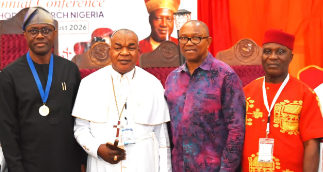
Nigerian leaders, church decry poor governance amid insecurity, economic woes
Translated from English, summarized and contextualized by DistantNews.
At a glance
News
Sources not specified
Context piece
- Nigerian leaders and the Methodist Church have criticized the country's poor leadership and called for action on insecurity and economic challenges.
- Governor Seyi Makinde and presidential candidate Peter Obi identified poor leadership as the primary cause of Nigeria's development issues, despite abundant resources.
- The Methodist Church Nigeria urged the Federal Government to increase efforts to address the nation's pressing economic and security concerns.
Nigerian leaders and religious figures are voicing strong criticism over the nation's persistent challenges with insecurity and economic instability. Governor Seyi Makinde of Oyo State and Peter Obi, a presidential candidate, pointed to a fundamental flaw: poor leadership. They argue that despite Nigeria's vast human and natural resources, its development is consistently hampered by inadequate governance.
Their remarks highlight a growing frustration with the status quo. The Methodist Church Nigeria has echoed these sentiments, issuing a direct appeal to the Federal Government. The church is urging intensified efforts to tackle the twin crises of insecurity and a struggling economy, underscoring the urgency felt across various sectors of society.
These calls for action suggest a widespread demand for accountability and effective solutions. The focus on leadership as the root cause implies a belief that systemic change, driven by better governance, is necessary to unlock Nigeria's potential and address the daily struggles faced by its citizens.
DistantNews Editorial
Originally published by Vanguard in English. Translated, summarized, and contextualized by our editorial team with added local perspective. Read our editorial standards.
More Stories
From Our Blog

How the Same Story Looks Different in Different Countries

What Gets Lost (and Found) When News Is Translated

The Critical Role of Diaspora Media in Global News

What Travellers Should Know About Countries with Restricted Press

A Digital Nomad's Guide to Following Local News
