


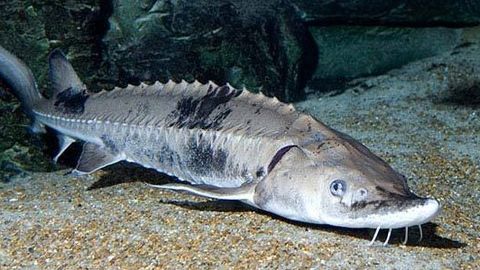
North American Lake Sturgeon Live Twice as Long as Thought, Study Finds
Translated from Estonian, summarized and contextualized by DistantNews.
At a glance
News
Sources not specified
Context piece
- A new study reveals that lake sturgeon in North America can live twice as long as previously thought, with some individuals reaching 200 to over 400 years.
- Researchers used a new mathematical model to overturn the previous age limit of 150 years for the species.
- This updated understanding of the long-lived species' lifespan will aid in its conservation efforts.
Giant lake sturgeon dwelling in North American freshwater ecosystems may live significantly longer than scientists previously believed. New research indicates that some individuals of this ancient species could reach ages of 200, 300, or even exceed 400 years.
Previously, the maximum lifespan for lake sturgeon was estimated at 150 years. However, scientists have now developed a novel mathematical model that challenges this long-held assumption. This new approach allows for a more accurate assessment of the fish's age, revealing a much longer potential lifespan.
The lake sturgeon is a species that has existed for millions of years. Understanding its true longevity is crucial for effective conservation strategies. By revising the estimated age limit, researchers can better protect this remarkable and long-lived fish, ensuring its continued survival.
DistantNews Editorial
Originally published by Postimees in Estonian. Translated, summarized, and contextualized by our editorial team with added local perspective. Read our editorial standards.
More Stories
/nginx/o/2026/08/21/17867439t1h7798.jpg)
/nginx/o/2026/08/18/17855919t1hebb0.jpg)
From Our Blog

What Gets Lost (and Found) When News Is Translated

The Critical Role of Diaspora Media in Global News

What Travellers Should Know About Countries with Restricted Press

A Digital Nomad's Guide to Following Local News

How the Same Story Looks Different in Different Countries
