

/nginx/o/2026/08/21/17867439t1h7798.jpg)
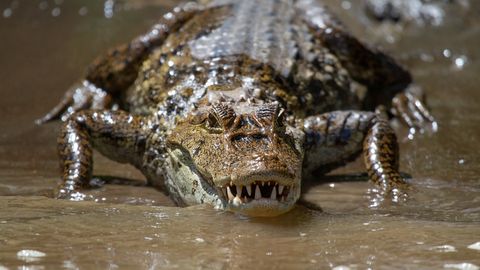
Crocodiles switched to reverse – from warm-blooded creatures to cold-blooded killers, they survived a huge catastrophe
Translated from Estonian, summarized and contextualized by DistantNews.
At a glance
In-depth
Sources not specified
Context piece
- New findings suggest ancient crocodile ancestors were warm-blooded and energetic, unlike their modern cold-blooded counterparts.
- Researchers believe a metabolic shift, or 'rewind,' may have saved the crocodile lineage from extinction.
- This metabolic change is linked to fossilized foot bones and their small vascular channels, contrasting with the fate of other archosaur branches that led to birds.
Crocodiles today are perceived as slow, cold-blooded ambush predators, but new fossil evidence suggests their ancient ancestors may have been quite different. Researchers now propose that these early crocodile relatives were energetic, warm-blooded animals.
This surprising revelation stems from the study of fossilized foot bones, specifically the tiny vascular channels within them. These channels indicate a higher metabolic rate than typically associated with modern reptiles. The findings challenge the long-held view of crocodiles as consistently cold-blooded creatures throughout their evolutionary history.
Scientists theorize that a significant metabolic change, described as a 'rewind,' might be the key reason the crocodile lineage survived a massive global catastrophe. While one branch of archosaurs evolved into the birds we know today, the ancestors of crocodiles seemingly adapted by becoming less metabolically active, a trait that proved advantageous for survival.
This metabolic shift is believed to have allowed crocodiles to endure the harsh conditions following a major extinction event, possibly linked to the famous impact crater. The ability to slow down their metabolism may have been crucial for conserving energy and resources when the environment became unstable, ultimately saving them from the fate that befell many other species.
DistantNews Editorial
Originally published by Postimees in Estonian. Translated, summarized, and contextualized by our editorial team with added local perspective. Read our editorial standards.
More Stories
/nginx/o/2026/08/18/17855919t1hebb0.jpg)

From Our Blog

What Gets Lost (and Found) When News Is Translated

The Critical Role of Diaspora Media in Global News

What Travellers Should Know About Countries with Restricted Press

A Digital Nomad's Guide to Following Local News

How the Same Story Looks Different in Different Countries
