


North Korea, Russia reaffirm ties on Korean Liberation Day; Seoul seeks peace talks
Translated from English, summarized and contextualized by DistantNews.
At a glance
News
From a news agency
Ongoing story
- North Korean leader Kim Jong Un and Russian President Vladimir Putin reaffirmed deepening ties on Korean Liberation Day.
- Kim's message to Putin highlighted shared history and continued cooperation, following increased Pyongyang-Moscow alignment since the Ukraine war.
- South Korean President Lee Jae Myung called for peaceful coexistence talks with North Korea, aiming to replace the Korean War armistice with a peace regime.
North Korean leader Kim Jong Un and Russian President Vladimir Putin have reaffirmed their deepening relationship, exchanging messages on the anniversary of Korean Liberation Day. State news agency KCNA reported Sunday that Kim expressed hope for the future of ties that have "carried forward the history of common struggle for justice and precious traditions of friendship."
carried forward the history of common struggle for justice and precious traditions of friendship
Putin had sent a congratulatory message marking the 81st anniversary of Japan's surrender in World War Two, stating that the bond between Russia and North Korea was forged during the Soviet fight against Japan and that cooperation would continue across all sectors. The two nations have grown closer since North Korea began providing military support for Russia's war in Ukraine, marking Pyongyang's most significant foreign involvement in decades.
in all the sectors
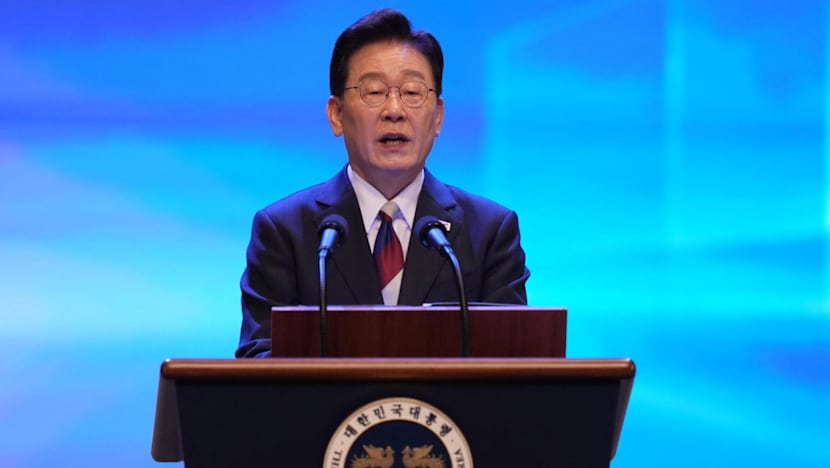
Adding to the day's diplomatic activity, South Korean President Lee Jae Myung addressed the nation, calling for dialogue with North Korea aimed at peaceful coexistence. Speaking at Seoul's Liberation Day ceremony, Lee emphasized the need for safeguards to prevent conflict and proposed replacing the 1950-1953 Korean War armistice with a formal "peace regime."
peaceful coexistence
Lee urged direct talks to officially end the Korean War, which concluded with a ceasefire but no peace treaty. He suggested these discussions could also explore avenues for curbing Pyongyang's nuclear program. However, North Korea has consistently rejected such overtures from Seoul and has criticized joint military exercises between South Korea and the United States as provocations. The ongoing diplomatic exchanges underscore the complex and evolving geopolitical landscape of the Korean Peninsula.
peace regime
DistantNews Editorial
Originally published by The Straits Times in English. Translated, summarized, and contextualized by our editorial team with added local perspective. Read our editorial standards.
More Stories
From Our Blog

What Gets Lost (and Found) When News Is Translated

The Critical Role of Diaspora Media in Global News

What Travellers Should Know About Countries with Restricted Press

A Digital Nomad's Guide to Following Local News

How the Same Story Looks Different in Different Countries
