


North Korea's Missile Modernization Creates Intelligence Confusion for Seoul, Washington
Translated from Korean, summarized and contextualized by DistantNews.
At a glance
News
Sources not specified
Ongoing story
- North Korea has significantly modernized its tactical and strategic missiles, introducing effectively new weapons that complicate analysis for South Korea and the U.S.
- Recent tests involving mixed launches of artillery, self-propelled howitzers, and suspected short-range ballistic missiles have caused confusion in intelligence assessments.
- Concerns persist about potential weakening of ROK-U.S. cooperation on North Korea, especially with the introduction of new nuclear facilities and advanced missile technologies.
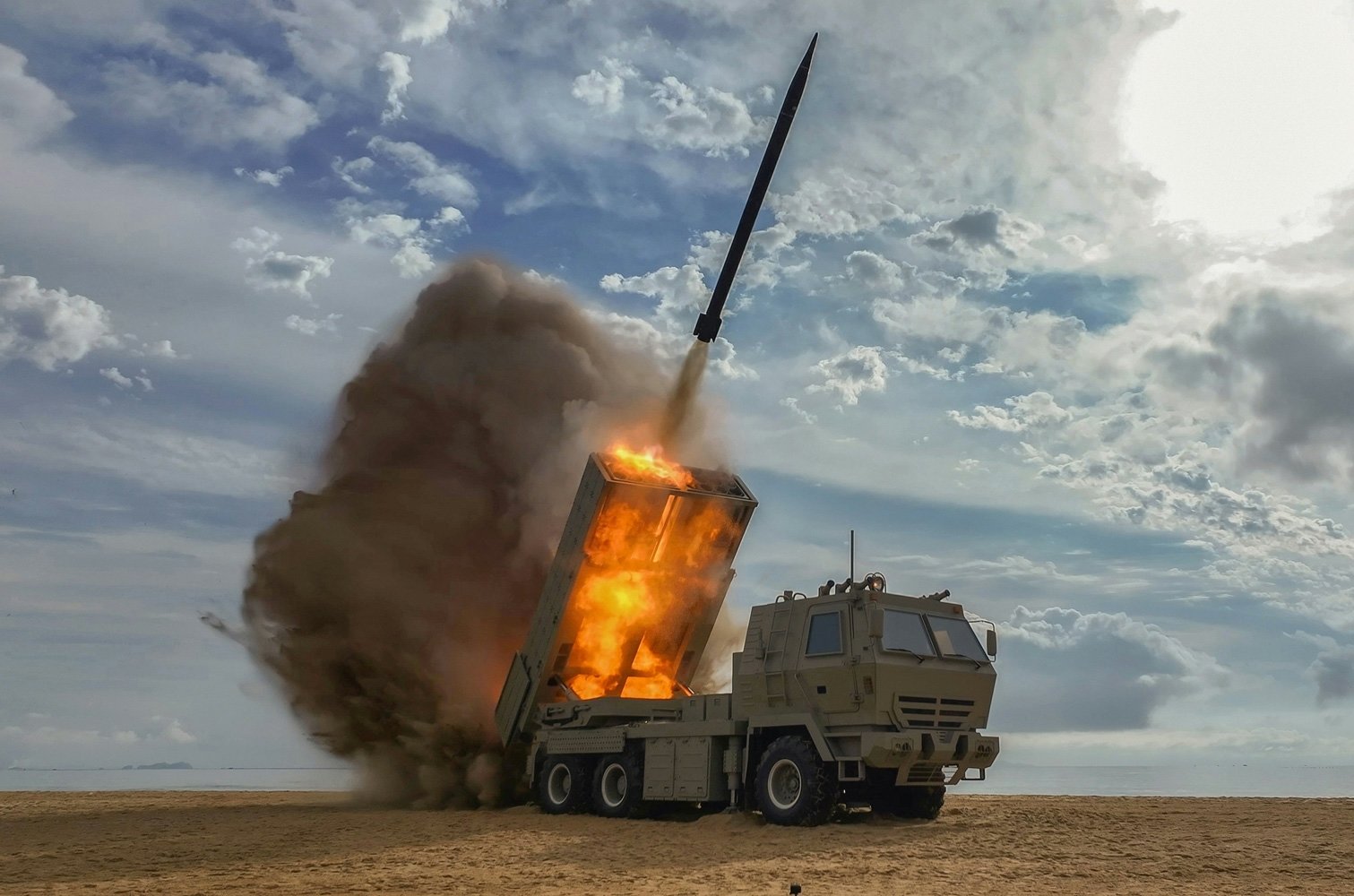
North Korea's recent advancements in missile technology are creating significant challenges for South Korean and U.S. intelligence agencies. The country has introduced a substantial number of effectively new missiles this year, through modernization of existing tactical and strategic systems, making detailed analysis increasingly difficult.
Intelligence gathering and analysis time has increased, and recent events have drawn criticism for failing to immediately identify whether North Korea launched ballistic missiles. During a provocation on May 25, involving a mix of artillery, self-propelled howitzers, and suspected short-range ballistic missiles, the South Korean and U.S. forces reportedly could not immediately determine if a ballistic missile was fired. North Korea claimed to have equipped a ballistic missile with a 'special mission warhead' and fired it with a shortened range, possibly to around 70 km, similar to the range of a 240mm multiple rocket launcher.
This tactic of launching various projectiles, including those with shortened ranges, alongside artillery, is seen as a strategic move to confuse the U.S. and South Korea. North Korea has increasingly favored launching multiple types of missiles simultaneously in recent years, a strategy believed to be aimed at creating intelligence confusion.
The speed of North Korea's movements makes analysis difficult.
Further complicating the situation, North Korea has claimed to have tested missiles with specialized warheads, including cluster munitions designed for wide-area damage and carbon fiber munitions for disabling power grids. The country has also showcased improved guidance systems and artificial intelligence for cruise missiles. These developments, while not entirely novel globally, represent technologies North Korea has not previously possessed in such quantity or variety, heightening the sensitivity of intelligence agencies.
Concerns are also rising about potential disruptions to ROK-U.S. cooperation on North Korea, particularly following statements about new nuclear facilities and the potential for 'strategic flexibility' policies under a future Trump administration that might reduce U.S. forces in Korea. North Korea's leader, Kim Jong Un, has vowed to ensure adversaries are aware of the rapid replacement and deployment of modernized long-range strike capabilities, signaling continued escalation and a need for enhanced joint efforts.
We will make sure that our adversaries know in the shortest possible period that our long-range strike means have been replaced by modernized ones.
DistantNews Editorial
Originally published by Dong-A Ilbo in Korean. Translated, summarized, and contextualized by our editorial team with added local perspective. Read our editorial standards.
More Stories

From Our Blog

What Gets Lost (and Found) When News Is Translated

The Critical Role of Diaspora Media in Global News

What Travellers Should Know About Countries with Restricted Press

A Digital Nomad's Guide to Following Local News

How the Same Story Looks Different in Different Countries
