

Two South Korean ships, 35 crew remain in Strait of Hormuz after ceasefire
Translated from Korean, summarized and contextualized by DistantNews.
At a glance
News
Named sources
Ongoing story
- Two South Korean ships and 35 crew members remain in the Strait of Hormuz following a ceasefire agreement between the US and Iran.
- The HMM Namu ship, damaged by an Iranian missile, is expected to leave the strait by mid-July after repairs.
- South Korea's Ministry of Oceans and Fisheries has been coordinating with multiple government agencies to ensure the safety of its vessels and crew in the region.
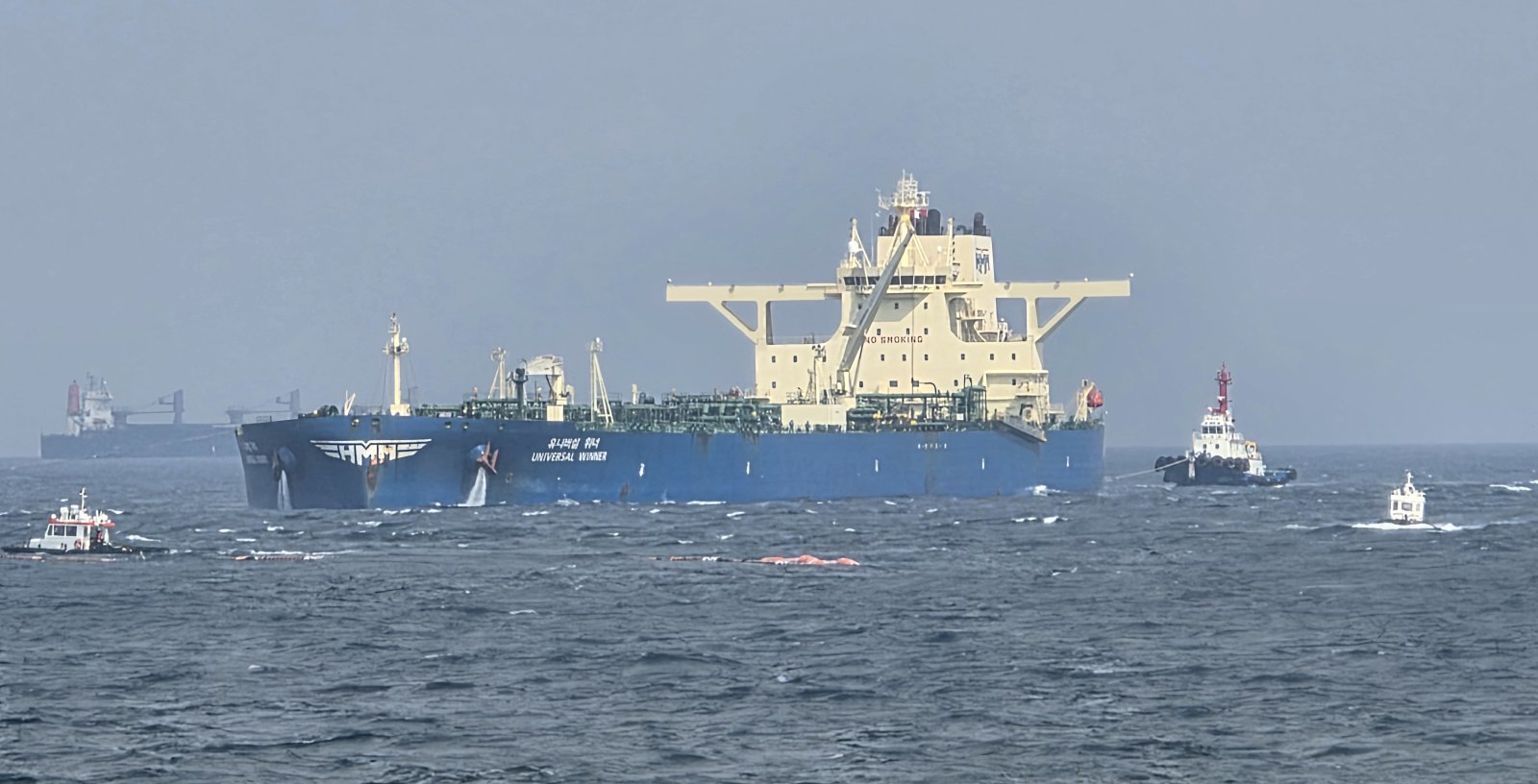
Two South Korean ships and 35 crew members remain in the Strait of Hormuz, a critical maritime chokepoint, following a ceasefire agreement between the United States and Iran. The HMM Namu container ship, which sustained damage from two Iranian anti-ship missiles in May, is undergoing repairs and is expected to depart the strait by mid-July.
The Ministry of Oceans and Fisheries (MOF) announced that another South Korean vessel is also still in the strait, awaiting cargo loading schedules before resuming passage. As of July 1, a total of 21 South Korean ships had successfully navigated out of the strait after the ceasefire agreement, with one more departing the previous day. This brings the total number of South Korean vessels that have exited the strait since the conflict began to 23.
HMM Namu will leave the strait after repairs are completed in mid-July.
During the height of the conflict in February, 26 South Korean ships with 146 crew members were in the Persian Gulf section of the strait. The MOF has been operating an emergency response team since March 1, coordinating with the Ministry of Foreign Affairs, the Ministry of National Defense, the National Intelligence Service, and the Coast Guard. They have maintained 24-hour communication with shipping companies and vessels via social messenger and satellite phones, providing real-time monitoring of crew and ship safety.
Our ministry, the Ministry of Foreign Affairs, the National Security Office, the Ministry of National Defense, the NIS, and the Coast Guard are cooperating as one team to do our best to ensure our ships can safely leave the Strait of Hormuz.
"Our ministry, the Ministry of Foreign Affairs, the National Security Office, the Ministry of National Defense, the NIS, and the Coast Guard are cooperating as one team to do our best to ensure our ships can safely leave the Strait of Hormuz," said an MOF official. "As the detailed ceasefire negotiations continue for another 60 days, we will closely monitor the passage and management situation in the strait and strengthen our cooperation with related ministries, including the Ministry of Foreign Affairs."
In addition to the ships in the Strait of Hormuz, South Korea continues to receive crude oil from Saudi Arabia's Yanbu port via the Red Sea. Currently, 10 oil tankers are transporting 20 million barrels of crude oil, with seven having already arrived in South Korea.
As the detailed ceasefire negotiations continue for another 60 days, we will closely monitor the passage and management situation in the strait and strengthen our cooperation with related ministries, including the Ministry of Foreign Affairs.
DistantNews Editorial
Originally published by Dong-A Ilbo in Korean. Translated, summarized, and contextualized by our editorial team with added local perspective. Read our editorial standards.
More Stories



From Our Blog

What Gets Lost (and Found) When News Is Translated

The Critical Role of Diaspora Media in Global News

What Travellers Should Know About Countries with Restricted Press

A Digital Nomad's Guide to Following Local News

How the Same Story Looks Different in Different Countries
