


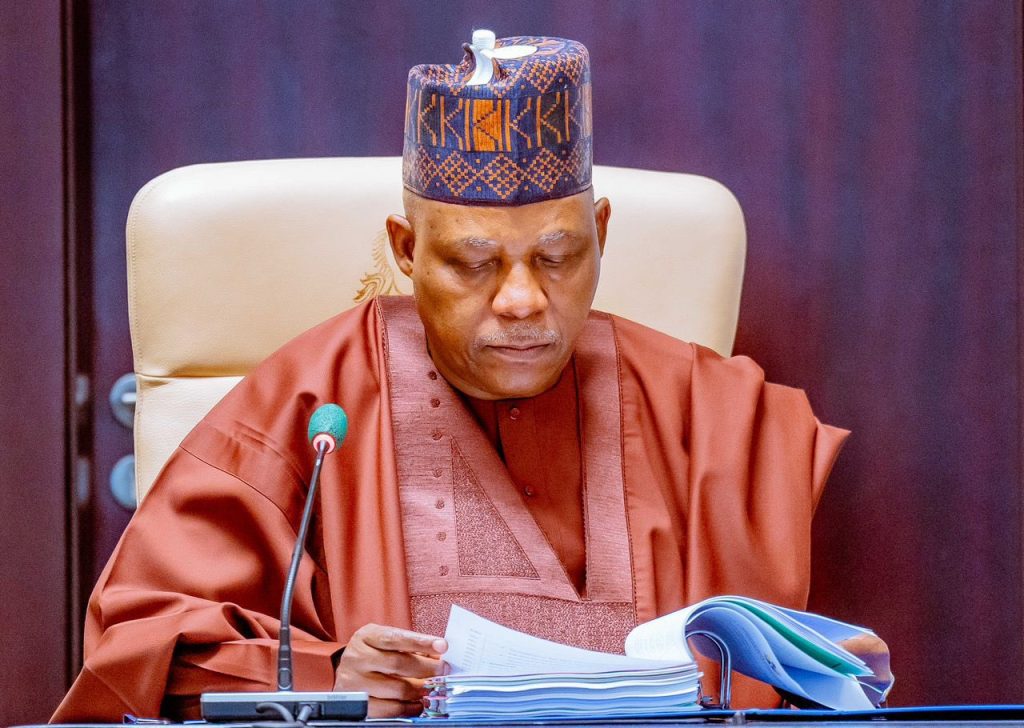
Northern communities need urgent investment in health, education, Shettima | Vanguard (NG)
Translated from English, summarized and contextualized by DistantNews.
At a glance
News
Named sources
Context piece
- Vice President Kashim Shettima called for urgent investment in health, education, and skills development in northern Nigeria.
- He highlighted that the region bears the greatest consequences of inadequate human capital development, citing poor maternal health and low school enrollment.
- Shettima urged state governors to take ownership of the human capital agenda, as primary healthcare and education fall under their responsibility.
Vice President Kashim Shettima has urgently called for significant investments in health, education, and skills development across northern Nigeria, stating the region has suffered immensely from deficits in human capital. Speaking at the Northern Nigeria Human Capital Development Summit in Abuja, Shettima, represented by Deputy Chief of Staff Sen. Ibrahim Hadejia, emphasized that the consequences of underdevelopment are acutely felt in the North.
No part of this country has paid the price for the inadequacy of human capital as much as northern Nigeria.
"No part of this country has paid the price for the inadequacy of human capital as much as northern Nigeria," Shettima stated. He pointed to dire outcomes such as maternal mortality, low school enrollment rates, and limited opportunities for young people. He described these deficits as burdens carried by the region's population, lacking the necessary tools for advancement. Shettima believes that despite its rich population, talent, and potential, the North requires deliberate investment to convert these assets into prosperity.
You have paid for it in the bodies of mothers who do not survive the act of giving life.
The Vice President lauded the summit as a timely intervention, stressing the need to confront development challenges and close existing gaps. He referenced the Federal Government’s Human Capital Development (HCD) 2.0 Strategy as a roadmap for improving health, education, nutrition, skills, and livelihoods. Shettima directly appealed to state governors and other stakeholders to champion the human capital agenda, reminding them that essential services like schools and primary healthcare centers fall under their purview.
This has also been done in the minds of children who are never taught to read, and in the talents of young people who carry the weight of a region without the tools to lift it.
Governor Abdullahi Sule of Nasarawa State identified the Almajiri system, out-of-school children, and early marriage as critical obstacles to human capital development in the North. He acknowledged that millions of children remain outside the formal education system. Sule shared that Nasarawa State repatriated over 200,000 Almajiri children during the COVID-19 pandemic, though the challenge persists. He indicated that northern states account for a significant portion of Nigeria's out-of-school children, estimated at around 15 million.
The classrooms are in your states. The primary healthcare centres are under your authority. The teachers, nurses, midwives and community workers are all in your employ.
DistantNews Editorial
Originally published by Vanguard in English. Translated, summarized, and contextualized by our editorial team with added local perspective. Read our editorial standards.
More Stories


From Our Blog

How the Same Story Looks Different in Different Countries

What Gets Lost (and Found) When News Is Translated

The Critical Role of Diaspora Media in Global News

What Travellers Should Know About Countries with Restricted Press

A Digital Nomad's Guide to Following Local News
