


Norway Solves Urban Bus Driver Shortage with Autonomous Technology
Translated from Polish, summarized and contextualized by DistantNews.
TLDR
- Norway's Public Roads Administration has authorized regular passenger service using autonomous buses without a safety driver onboard.
- This marks a significant step, moving beyond projects that previously required a supervisor in the vehicle.
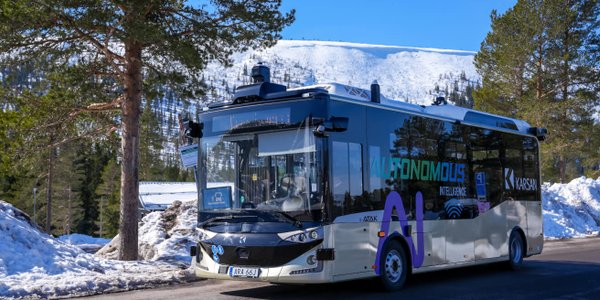
- The initiative utilizes Karsan e-ATAK electric buses equipped with ADASTEC's autonomous driving system, managed remotely via the xFlow platform.
Norway is once again at the forefront of technological innovation in public transportation, with the recent authorization for fully autonomous bus services in Stavanger. This decision by the Public Roads Administration to allow regular passenger routes without a safety driver represents a pivotal moment, transitioning from supervised trials to genuine driverless operations in a controlled urban environment. The implementation relies on the Karsan e-ATAK electric bus, powered by ADASTEC's autonomous driving technology and managed by Applied Autonomy's xFlow fleet management platform.
What makes this development particularly noteworthy from our perspective at Rzeczpospolita is its pragmatic approach to addressing real-world challenges. The article highlights that the motivation behind this advancement is not solely technological ambition, but a pressing need to solve the driver shortage plaguing the transport industry. Olav Madland, CEO of Applied Autonomy, emphasizes that this technology offers a viable solution for maintaining and expanding public transport networks where driver recruitment is proving difficult. This is a crucial point often overlooked in international discussions, which tend to focus on the futuristic aspects rather than the immediate economic and operational benefits.
Furthermore, the system's design, which allows a single operator in a control center to remotely monitor and manage multiple vehicles, addresses concerns about job displacement by reframing the role of transport workers. Instead of driving, operators will manage fleets, potentially leading to greater efficiency and reduced operational costs. This shift from direct vehicle operation to remote fleet management is a significant evolution. While some might raise concerns about job losses, the reality in the transport sector is often a lack of willing workers, making this technological leap a necessary adaptation rather than a replacement.
This Norwegian initiative is a clear signal of the future of public transport, demonstrating that autonomous technology can be integrated safely and effectively to overcome logistical hurdles. It's a testament to Norway's commitment to sustainable and efficient mobility solutions, and a model that other nations, grappling with similar labor shortages, would do well to observe.
Our technology allows one operator to remotely support and supervise multiple vehicles simultaneously. This offers a real opportunity to maintain, and even expand, the network of connections in places where drivers are scarce.
DistantNews Editorial
Originally published by Rzeczpospolita in Polish. Translated, summarized, and contextualized by our editorial team with added local perspective. Read our editorial standards.
More Stories



From Our Blog

What Gets Lost (and Found) When News Is Translated

The Critical Role of Diaspora Media in Global News

What Travellers Should Know About Countries with Restricted Press

A Digital Nomad's Guide to Following Local News

How the Same Story Looks Different in Different Countries
