


Oak processionary moth widespread in Thuringia, posing health risks
Translated from German, summarized and contextualized by DistantNews.
At a glance
News
Official statement
Context piece
- The oak processionary moth has become widespread across Thuringia, Germany, with presence detected in almost all forest districts.
- The moth's caterpillars, which feed on oak leaves, possess irritating hairs that can cause skin irritation and respiratory problems in humans.
- While the trees are not currently endangered by leaf loss, the widespread establishment of the insect is noted, with measures like drone-based spraying being used in some areas.
The oak processionary moth (Eichenprozessionsspinner) has established itself widely across the German state of Thuringia, with evidence of its presence found in nearly all forest districts, excluding only the Neuhaus Forest Office. This widespread distribution has been confirmed by the Thuringian Ministry of Environment in response to an inquiry from the AfD parliamentary group.
Previously concentrated in the Jena-Holzland and Heldburg forest districts, the pest has seen a new hotspot emerge in the Bad Salzungen Forest Office over the past year. The State Forest Institute registered approximately 500 infestation sites in or near forests in 2025. Authorities now assume the oak processionary moth has become broadly established within Thuringia's oak populations. Currently, the affected trees are not considered endangered, as the extent of leaf loss remains within critical limits.
The oak processionary moth has become widely established in Thuringia's oak stands.
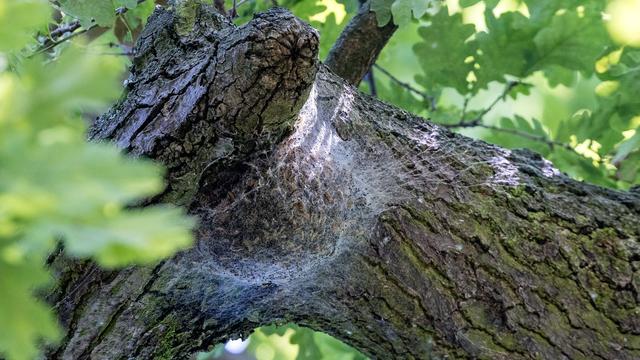
In 2024, traces of the moth, its larvae, or its characteristic webs were found in 21 out of 24 Thuringian forest districts. While the adult moth poses no threat to humans or animals, its caterpillars are problematic. They feed on oak leaves and buds, and their nests, which can grow to the size of a football, contain fine hairs. These hairs break off easily, can be carried by the wind over long distances, and cause significant skin irritation and respiratory issues in people.
Beyond forest areas, eight reports of webs were noted in public green spaces last year, primarily in the Wartburg district and Hildburghausen. Measures to control the spread have included removing webs and, in one instance in Saalfeld, using a drone to disperse a biocide. The spread of the oak processionary moth in Germany is reportedly exacerbated by climate change.
The caterpillars have fine stinging hairs that can easily break off and be spread by the wind over long distances. In humans, they can cause skin irritation and respiratory problems.
DistantNews Editorial
Originally published by Die Zeit in German. Translated, summarized, and contextualized by our editorial team with added local perspective. Read our editorial standards.
More Stories



From Our Blog

What Gets Lost (and Found) When News Is Translated

How the Same Story Looks Different in Different Countries

The Critical Role of Diaspora Media in Global News

What Travellers Should Know About Countries with Restricted Press

A Digital Nomad's Guide to Following Local News
