

Obama urges diplomacy over military action in Iran, defends 2015 deal
Translated from Polish, summarized and contextualized by DistantNews.
At a glance
News
Sources not specified
Context piece
- Former U.S. President Barack Obama cautioned against military action in Iran, advocating for diplomacy.
- Obama stated that the 2015 nuclear deal, which he negotiated, was effective in preventing Iran from obtaining nuclear weapons.
- He expressed hope that diplomacy would prevail over bombings and suffering, emphasizing that even partial agreements are valuable.
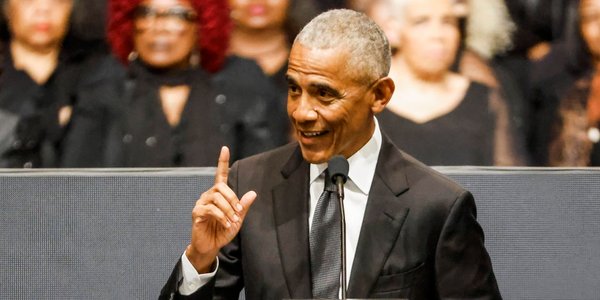
Former U.S. President Barack Obama has urged a diplomatic approach to international challenges, particularly concerning Iran, warning against the temptation of military solutions.
My deal with Iran is the exact opposite of this – it's a wall against a nuclear weapon. They don't want to have a nuclear weapon anymore and they're not going to get one, either by purchase, by their development, or by any other means.
In comments made during an interview with ABC News, Obama reflected on the 2015 Joint Comprehensive Plan of Action (JCPOA) with Iran, which he helped negotiate. He asserted that the agreement served as a "wall" against Iran acquiring nuclear weapons, stating, "They don't want to have a nuclear weapon anymore and they're not going to get one."
Obama's remarks come amid ongoing discussions about Iran's nuclear program and international relations. He suggested that any new agreement is unlikely to significantly differ from or improve upon the original deal. The former president emphasized the value of diplomacy, even when it doesn't solve every problem.
It is unlikely that any new agreement will differ significantly from the original agreement or be a significant improvement.
"The idea that we can just impose our will through force or bombing to find solutions might seem tempting at times," Obama said. "But we need to take the time to explore diplomatic avenues and exhaust the possibilities of reaching agreements that don't solve 100 percent of the problem, but solve 80 or 90 percent."
The idea that we can just impose our will through force or bombing to find solutions might seem tempting at times. But we need to take the time to explore diplomatic avenues and exhaust the possibilities of reaching agreements that don't solve 100 percent of the problem, but solve 80 or 90 percent.
He concluded by expressing a hope that "bombings will cease, and ordinary people will no longer suffer as a result of war," suggesting that lessons about the efficacy of diplomacy must be relearned periodically.
You might think we learned that lesson a long time ago, but it seems that every now and then we have to learn it anew.
DistantNews Editorial
Originally published by Rzeczpospolita in Polish. Translated, summarized, and contextualized by our editorial team with added local perspective. Read our editorial standards.
More Stories

From Our Blog

What Gets Lost (and Found) When News Is Translated

The Critical Role of Diaspora Media in Global News

What Travellers Should Know About Countries with Restricted Press

A Digital Nomad's Guide to Following Local News

How the Same Story Looks Different in Different Countries
