


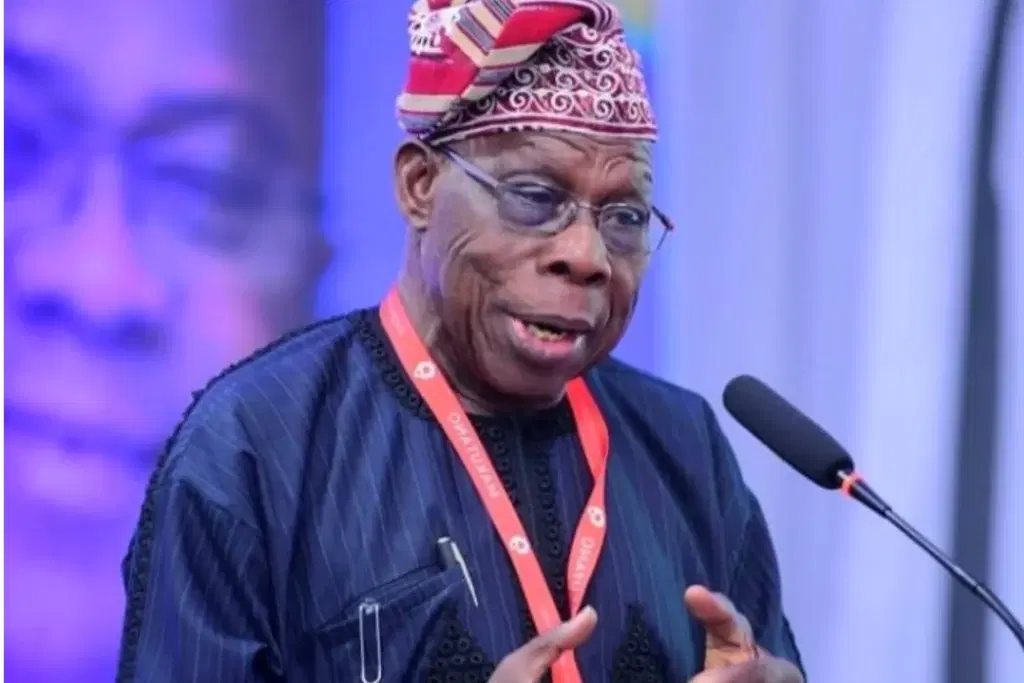
Obasanjo Rejects Osoba's 2003 Deception Claim, Defends Political Strategy
Translated from English, summarized and contextualized by DistantNews.
At a glance
News
Named sources
Context piece
- Former President Olusegun Obasanjo rejected claims by ex-Ogun State Governor Olusegun Osoba that he deceived Yoruba leaders in 2003.
- Obasanjo stated he acted with openness and in the national interest, presenting his case clearly.
- He defended his decision to form a broad-based national government after winning the presidency, citing a desire for national unity.
Former President Olusegun Obasanjo has strongly refuted claims made by former Ogun State Governor, Chief Olusegun Osoba, that he deceived leaders of the Alliance for Democracy (AD) during the political realignments preceding the 2003 general elections. Obasanjo asserted that he neither misled anyone nor acted in bad faith throughout the political processes.
I take strong and serious objection to your calling me a deceiver because I deceived nobody. I always presented my case and all issues as I had them and as I understood them, no matter whose ox is gored.
In a detailed letter dated July 23, 2026, titled “Reply to Your Inaccurate Posture: ‘How Obasanjo Deceived Us in 2003′”, Obasanjo described Osoba’s account, published on July 20, as “farfetched” and containing numerous inaccuracies, omissions, and misconceptions. He took particular exception to Osoba’s allegation of deceiving Yoruba political leaders, insisting that his political engagements were consistently guided by transparency and the national interest.
“I take strong and serious objection to your calling me a deceiver because I deceived nobody. I always presented my case and all issues as I had them and as I understood them, no matter whose ox is gored,” Obasanjo wrote. He argued that Osoba was unaware of several political developments before his 1999 presidential emergence because senior leaders of Afenifere and the AD handled them. Obasanjo disclosed that after his release from prison, various groups urged him to contest the presidency, including delegations led by Lawan Katsina, the late Chief S.M. Afolabi, and Chief Martins Kuye. These consultations informed his decision to join the Peoples Democratic Party (PDP) after extensive discussions with leaders across the South-West, North, and South-East.
There was no time I called on Papa Adesanya that I was not well entertained. Yet Papa stood on no vote for me and I stood on my respect and what was due to him.
Recalling his interactions with the late Afenifere leader, Chief Abraham Adesanya, Obasanjo noted that despite being repeatedly told the Yoruba people would not vote for him, he maintained a cordial relationship with the elder statesman. “There was no time I called on Papa Adesanya that I was not well entertained. Yet Papa stood on no vote for me and I stood on my respect and what was due to him,” he stated. Obasanjo defended his decision to invite the AD into a broad-based national government after his presidential victory, framing it as a move to promote national unity rather than a sign of weakness. “Bringing PDP and AD to join me for a sort of national government was not out of weakness; rather, it was out of strength and for the unity and progress of the country.” Obasanjo also contested Osoba’s version of events surrounding the attempted impeachment of then Speaker of the House of Representatives, Ghali Na’Abba, alleging the plot originated within his own administration, with his then Vice-President allegedly pursuing his own presidential ambitions simultaneously.
Bringing PDP and AD to join me for a sort of national government was not out of weakness; rather, it was out of strength and for the unity and progress of the country.
DistantNews Editorial
Originally published by Vanguard in English. Translated, summarized, and contextualized by our editorial team with added local perspective. Read our editorial standards.
More Stories

From Our Blog

How the Same Story Looks Different in Different Countries

What Gets Lost (and Found) When News Is Translated

The Critical Role of Diaspora Media in Global News

What Travellers Should Know About Countries with Restricted Press

A Digital Nomad's Guide to Following Local News
