


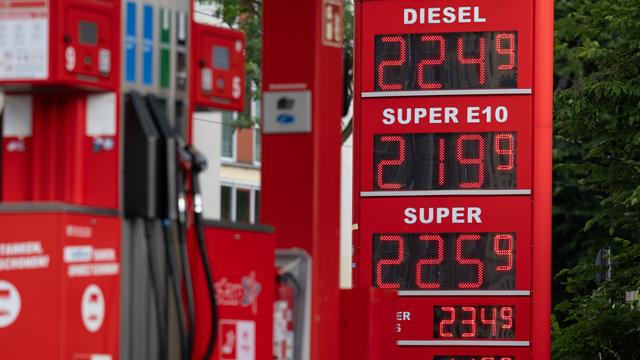
Oil prices climb amid Iran conflict; US economic pressure strategy questioned
Translated from German, summarized and contextualized by DistantNews.
At a glance
Analysis
From a news agency
Context piece
- Global energy markets remain tense due to the ongoing conflict in Iran, with oil prices rising.
- The US is employing an "economic war" strategy against Iran, aiming to force concessions, but experts doubt its immediate effectiveness.
- Negotiations for a peace settlement are not occurring, dimming prospects for a stable resolution and the reopening of the Strait of Hormuz.
The ongoing conflict in Iran, initiated by the United States and Israel, continues to destabilize global energy markets, driving up oil prices. US President Donald Trump has adopted an "economic war" strategy, seeking to compel Tehran to make concessions, though experts express skepticism about its swift success.
Currently, no negotiations are underway to end the conflict, according to Trump's statements. This lack of diplomatic engagement further recedes the possibility of lasting peace and the reopening of the critical Strait of Hormuz shipping lane. The article explores the implications of Trump's new approach for the oil market and consumers, with a particular focus on diesel prices.
Trump's strategy involves an economic "D-Day" aimed at pressuring Iran's leadership and isolating it from international partners like China. While many details remain unclear, significant sanctions against Iran are already in effect, yet they have not yielded the desired results from the US perspective. Despite Trump's claims of an open Strait of Hormuz, shipping traffic has largely remained below pre-war levels. Many Gulf exporters lack viable alternative routes, highlighting the strait's crucial role, through which approximately a quarter of the world's oil was transported before the conflict.
The benchmark Brent crude oil price has steadily increased since early August, even after Trump announced his "economic war" strategy. A barrel now costs around $94, a significant rise from approximately $74 before the conflict. The oil price surge is attributed to the evaporation of optimism following a framework agreement reached in mid-June between Iran and the US. "This optimism has faded," noted Thomas Puls, an economist at the Institute of the German Economy (IW), suggesting the market had priced in a peace settlement. However, Puls also pointed out that oil prices do not solely reflect the market's precise situation. Major consumers like China and the US are mitigating effects by drawing down their own oil reserves, reducing global market demand. China, for instance, has cut its oil imports to 2016 levels, a move with a greater impact than the International Energy Agency's (IEA) release of strategic reserves, in which Germany participated to a limited extent.
This optimism has faded.
DistantNews Editorial
Originally published by Die Zeit in German. Translated, summarized, and contextualized by our editorial team with added local perspective. Read our editorial standards.
More Stories


From Our Blog

What Gets Lost (and Found) When News Is Translated

How the Same Story Looks Different in Different Countries

The Critical Role of Diaspora Media in Global News

What Travellers Should Know About Countries with Restricted Press

A Digital Nomad's Guide to Following Local News
