


Oil Prices Drop, Markets Rise on US-Iran Deal; Experts Warn of Instability
Translated from Greek, summarized and contextualized by DistantNews.
At a glance
News
Sources not specified
New plan
- Oil prices dropped and stock markets rose following a framework agreement between the US and Iran to end the war, with the US president stating it would reopen the Strait of Hormuz.
- Despite the positive market reaction, some experts warn of continued instability and price volatility due to a lack of detailed information about the agreement.
- The deal, brokered by Pakistan, is set for official signing on June 19 in Switzerland, but concerns remain about its specifics and potential impact on global energy markets.
Oil prices have fallen and global stock markets have surged following reports of a framework agreement between the United States and Iran aimed at ending the ongoing conflict. U.S. President Donald Trump indicated that the deal would lead to the reopening of the vital Strait of Hormuz shipping lane.
the deal will lead to the reopening of the strategic maritime route of the Strait of Hormuz.
Brent crude, the international benchmark, saw a 4.7% decline, settling at $83.24 per barrel. Asian and European stock markets reacted positively to the news. Pakistan, which mediated the negotiations, announced that the official signing ceremony is scheduled for Friday, June 19, in Switzerland. Iran's Deputy Foreign Minister, Kazem Gharibabadi, confirmed the finalization of the agreement in a televised statement.
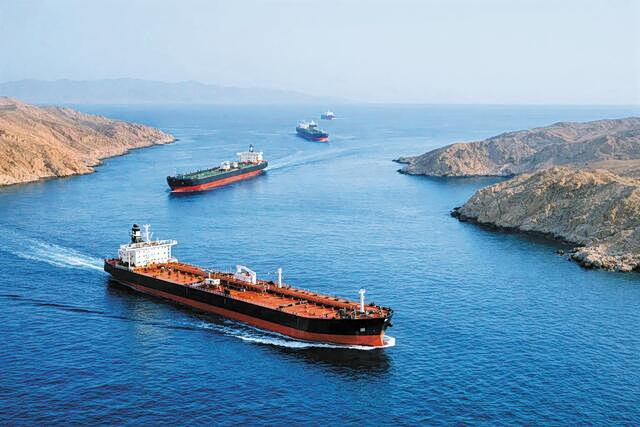
However, energy market experts express caution. Vandana Hari, an energy specialist at Vanda Insights, warned that the "lack of details" in the agreement could fuel "anxiety and uncertainty in the market." Hari anticipates a week of potential instability and significant price fluctuations for oil. The Strait of Hormuz, through which approximately 20% of the world's oil and liquefied natural gas (LNG) passes, had been a point of contention, with Tehran previously threatening to target vessels using the waterway.
the lack of the details about the content of the agreement is likely to cause anxiety and uncertainty in the market.
Global energy markets have experienced considerable volatility in recent months, with prices reacting sharply to developments in the U.S.-Iran conflict. Brent crude, which traded around $70 per barrel before the conflict, had surged to $120 at one point. Asian markets, heavily reliant on Middle East energy imports, saw strong gains, with Japan's Nikkei 225 closing up 5% and South Korea's Kospi rising 5.2%. European markets also saw increases, with Germany's Dax and France's Cac 40 up by approximately 1.7%, and London's FTSE 100 gaining 0.6%. The Strait of Hormuz has been effectively closed since late February following U.S. and Israeli airstrikes on Iran.
This may lead to a week of instability and sharp fluctuations in oil prices.
DistantNews Editorial
Originally published by Ta Nea in Greek. Translated, summarized, and contextualized by our editorial team with added local perspective. Read our editorial standards.
More Stories


From Our Blog

What Gets Lost (and Found) When News Is Translated

The Critical Role of Diaspora Media in Global News

What Travellers Should Know About Countries with Restricted Press

A Digital Nomad's Guide to Following Local News

How the Same Story Looks Different in Different Countries
