


Oil Prices Rally as Strait of Hormuz Tensions Escalate
Translated from Greek, summarized and contextualized by DistantNews.
At a glance
News
Named sources
Ongoing story
- Oil prices surged to their highest in four weeks, nearing $85 per barrel for Brent crude.
- Tensions escalated in the Strait of Hormuz after the U.S. reimposed a naval blockade on Iran.
- The developments have heightened concerns over global energy supply security.
Oil prices experienced a significant rally, reaching their highest point in four weeks and approaching $85 per barrel for Brent crude. This surge is largely attributed to heightened tensions in the Strait of Hormuz, following the United States' reimposition of a naval blockade on Iran.
The escalation in the strategic waterway has amplified concerns regarding the stability of global energy supplies. Brent crude futures climbed by 2%, settling at $84.98 per barrel, while U.S. West Texas Intermediate (WTI) crude rose by 2.1% to $79.79 per barrel. This marks a continuation of a strong upward trend, with Brent having already seen a substantial 9.6% increase in the previous session.
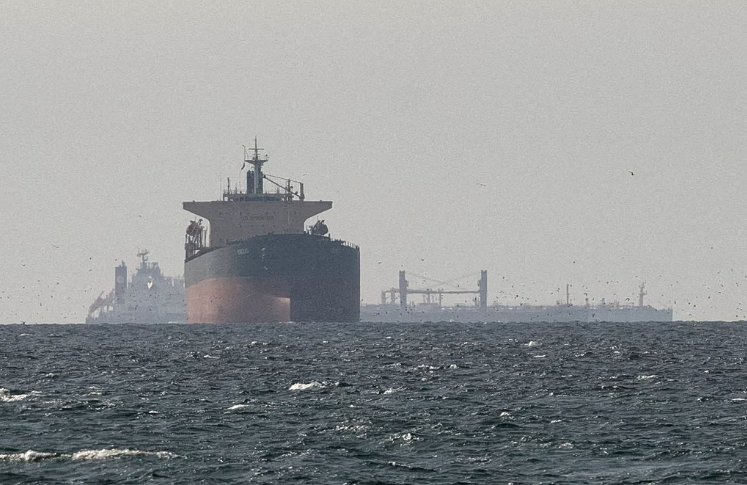
The situation intensified after the U.S. Department of Defense announced that two UAE oil tankers were struck by Iranian cruise missiles in Omani territorial waters near the Strait of Hormuz. The attack resulted in the death of one crew member and injuries to eight others. U.S. President Donald Trump confirmed the reimposition of the blockade on Iranian shipping, stating a desire for compensation for protecting regional allies.
The latest escalation, including the U.S. reimposition of the blockade and Iranian reactions, has clearly introduced new risk into the market.
"The latest escalation, including the U.S. reimposition of the blockade and Iranian reactions, has clearly introduced new risk into the market," said Tim Waterer, chief market analyst at KCM Trade. "While there has been no full closure of the Strait, the conflicting objectives of the two sides have made the outlook for energy supply extremely uncertain."
Further military activity was reported, with U.S. Central Command (CENTCOM) confirming a third consecutive night of strikes against Iran. Iranian state media also reported explosions in the port city of Bandar Abbas and on Kish Island. Global markets are closely monitoring these developments, as any disruption to energy transport routes can have immediate and significant impacts on oil and natural gas prices worldwide.
While there has been no full closure of the Strait, the conflicting objectives of the two sides have made the outlook for energy supply extremely uncertain.
DistantNews Editorial
Originally published by Ta Nea in Greek. Translated, summarized, and contextualized by our editorial team with added local perspective. Read our editorial standards.
More Stories

From Our Blog

What Gets Lost (and Found) When News Is Translated

The Critical Role of Diaspora Media in Global News

What Travellers Should Know About Countries with Restricted Press

A Digital Nomad's Guide to Following Local News

How the Same Story Looks Different in Different Countries
