

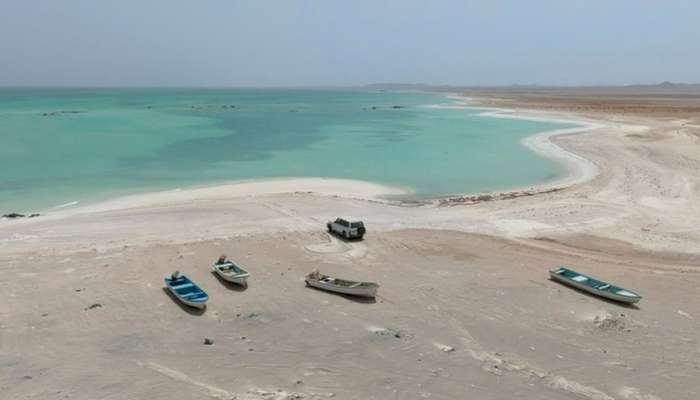
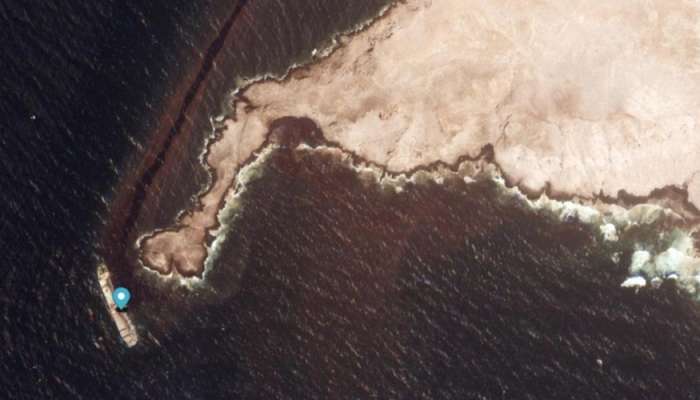
Oil slick from grounded ship 'Caroline Bezengi' extends 390sqkm off Oman’s Dhofar coast
Summarized and contextualized by DistantNews.
At a glance
News
Named sources
Ongoing story
- An oil slick from the grounded ship 'Caroline Bezengi' has spread to cover approximately 390 square kilometers off the coast of Oman's Dhofar Governorate.
- The slick is moving northeast and could reach within 7 kilometers of the shoreline, with potential to advance further depending on weather conditions.
- Authorities are working to contain the environmental impact, monitoring sensitive marine areas, and inspecting the ship's hull to identify and address leakage sources.
Oman's Dhofar Governorate is grappling with a significant environmental challenge as an oil slick from the grounded ship 'Caroline Bezengi' has expanded to cover an estimated 390 square kilometers of sea area. The slick, originating near the Hallaniyat Islands, is currently moving northeastward, posing a threat to the mainland coast. Satellite imagery and field surveys confirm its trajectory, with the slick coming as close as 7 kilometers to the shoreline at its nearest point.
Environmental authorities and the Ministry of Transport, Communications and Information Technology are engaged in coordinated efforts to mitigate the impact. Current modeling suggests the slick could advance another 121 kilometers over the next 48 hours, heavily influenced by prevailing winds and sea currents. While the 390 sq km figure represents the detected pollution area, not the volume of spilled oil, authorities are closely monitoring its changing shape and size due to environmental factors.
The authority stressed that the 390 sq km figure represents the geographical area where oil pollution was detected, not the quantity of oil spilled.
Specialist teams are conducting continuous monitoring of marine habitats, coral reefs, and turtle nesting sites, which are considered environmentally sensitive locations. The Environment Authority President, Dr. Abdullah bin Ali Al-Amri, has assured the public that vital facilities, including water desalination plants and fish farming projects, are not currently at risk. Seawater is being continuously examined, and emergency plans are in place to address various scenarios. Aircraft are actively tracking the slick's movement daily.
Adding to the complexity, difficult weather conditions have hampered technical operations. However, these same conditions have also aided in pushing the slick away from Omani shores. Meanwhile, technical teams are inspecting the ship's hull to pinpoint the sources of leakage and develop containment strategies. These efforts involve aerial surveillance, diving operations, and technical work aimed at safely transferring the ship's oil cargo before salvage operations can commence.
There is currently no cause for concern regarding vital facilities, including water desalination plants, the fish farming project, and economic and tourism systems along the coast, stressing that seawater is being continuously examined by specialist teams.
DistantNews Editorial
Originally published by Times of Oman. Summarized and contextualized by our editorial team with added local perspective. Read our editorial standards.
More Stories

From Our Blog

What Gets Lost (and Found) When News Is Translated

The Critical Role of Diaspora Media in Global News

What Travellers Should Know About Countries with Restricted Press

A Digital Nomad's Guide to Following Local News

How the Same Story Looks Different in Different Countries
