

Ontario will not become an ‘America lake’ with a single stroke of the pen
Translated from Hungarian and summarized by DistantNews. Read the original for the full story.
At a glance
Opinion
Sources not specified
Context piece
- The commentary challenges claims that Chinese media hid a disaster, saying Chinese websites contain many videos while warning that some dramatic footage may be digitally fabricated.
- It examines how governments and media adopt or reject historical place names, using Myanmar, Yangon and several Asian cities as examples.
- The piece argues that changes to geographical names are not always readily accepted by the public.
Claims that Chinese media completely concealed a disaster do not tell the whole story, the commentary argues. Although censorship operates in China, its large domestic media environment also contains many videos of the event on Chinese websites.
The piece cautions that the spread of artificial intelligence makes it difficult to determine which videos are genuine and which are digital fabrications. It also criticizes Western media for publishing numerous sensational videos that appear dramatic but may not be authentic.
A second theme is the politics of geographical names. British authorities and media continued to call Myanmar “Burma” as recently as 2007, despite the country’s official name since 1989, signaling London’s position toward the military junta. The commentary notes that Britain later accepted “Myanmar,” while the country’s former capital became Yangon rather than Rangoon.
It compares those changes with names that have disappeared from common usage in English, including Bombay, Calcutta, Trivandrum and Madras. It also says Guangzhou is no longer appropriately called Canton in politically careful usage, while the suffix “-king” has become outdated for Chinese city names in English because of its association with the Japanese occupation. Nanking became Nanjing, although Peking remains in Hungarian and French.
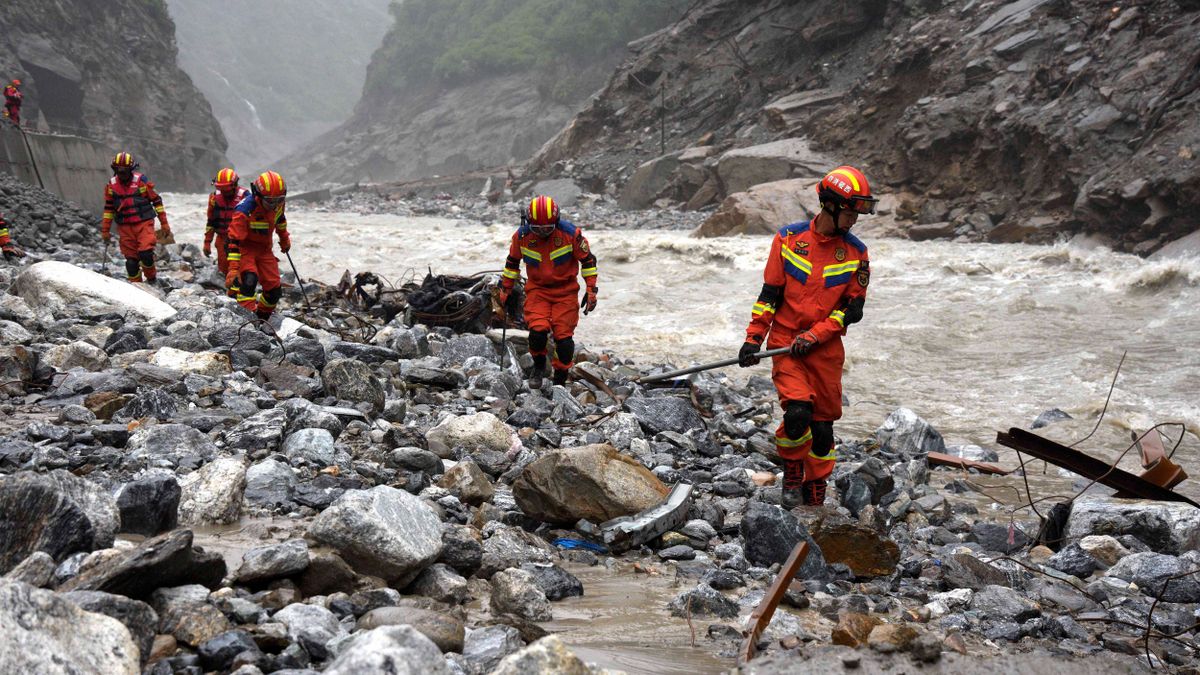
The cover image shows Chinese rescue teams in Tibet. The commentary’s central point is that people do not necessarily accept changes to geographical names without resistance.
About this summary
Originally published by Magyar Nemzet in Hungarian. Translated, summarized, and contextualized automatically by DistantNews, with a note on how the source frames the story. Not individually reviewed before publishing. How this works.
More Stories


From Our Blog

Countries Without a Free Press: What You Need to Know

What Press Freedom Means for the News You Read

What Gets Lost (and Found) When News Is Translated

The Critical Role of Diaspora Media in Global News

What Travellers Should Know About Countries with Restricted Press
