


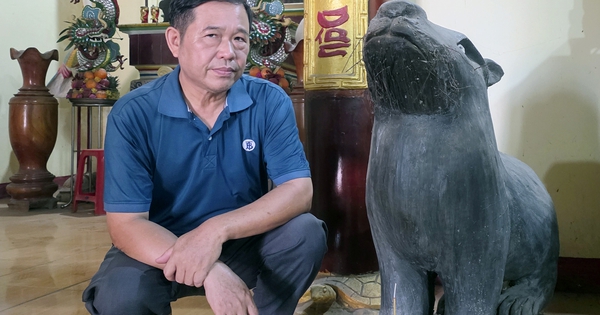
Otter statues guard ancient Vietnamese general's tomb, appearing in temples
Translated from Vietnamese and summarized by DistantNews. Read the original for the full story.
At a glance
In-depth
Sources not specified
Context piece
- Otters, once common water animals, have unexpectedly entered Southern Vietnamese folklore, appearing in temple rituals and historical records.
- Traces of the otter's significance are found in various locations, including tomb carvings and temple altars, suggesting a deeper cultural connection.
- The article explores the transition of the otter from a natural creature to a revered figure in Vietnamese folk beliefs and history.
The surprising presence of otters, revered as 'Dai Tuong Quan' or 'Great General,' in Vietnamese cultural sites is shedding light on a unique aspect of Southern folklore. What began as a playful greeting to otters at the Thao Cam Vien zoo has led to a fascinating investigation into the animal's symbolic journey from its natural habitat to revered status in temples and historical records.
Initial discoveries include a pair of weathered otter statues, approximately 50 cm long, adorning the tomb of national hero Vo Di Nguy in Ho Chi Minh City. These carvings, located on the tomb's wall, depict the otters in a watchful posture, guarding the resting place of the naval commander who died in battle in 1801. The exact reason for their inclusion remains unclear, with theories ranging from a connection to Vo Di Nguy's naval career to a royal honor recognizing his prowess on the water.
Further exploration reveals the otter's presence in a national heritage site, the Phu Nhuan ancient communal house. Here, a small plaque identifies 'Dong Nam Sat Hai Lang Lai Nhi Dai Tuong Quan,' or 'Southeast Sea-Killing Lang Lai Second Great General.' This title, often overlooked, refers to the otter, whose altar is placed to the left of the main shrine, acting as a guardian deity. Visitors are often surprised to learn the identity of this general, and the presence of otter altars is also noted in the Thang Tam communal house in Vung Tau.
The most striking representation of the otter as a revered figure is found at the Binh Hung communal house on Bach Dang islet. This location is perhaps the only place in Southern Vietnam where otters are depicted as actual statues. Within the main sanctuary, two nearly meter-high, dark gray otter statues stand on either side of the altar. Their detailed features, including eyes, snouts, whiskers, and long tails, are so lifelike that they can startle visitors. These are not mere symbols in a ritual text but appear as a pair of true guardian spirits, embodying the 'General Otter' title with striking realism.
About this summary
Originally published by Thanh Niên in Vietnamese. Translated, summarized, and contextualized automatically by DistantNews, with a note on how the source frames the story. Not individually reviewed before publishing. How this works.
More Stories

From Our Blog

What Gets Lost (and Found) When News Is Translated

The Critical Role of Diaspora Media in Global News

What Travellers Should Know About Countries with Restricted Press

A Digital Nomad's Guide to Following Local News

How the Same Story Looks Different in Different Countries
