


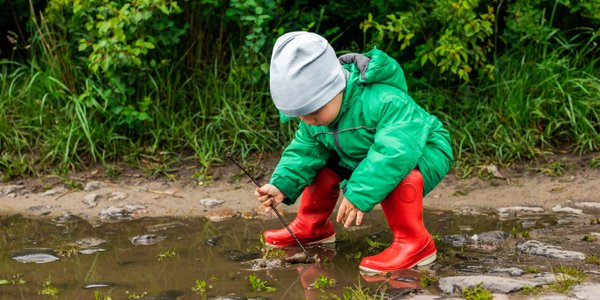
Outdoor Play in Early Childhood Boosts Children's Mental Health, Study Finds
Translated from Polish, summarized and contextualized by DistantNews.
At a glance
News
Documents & data
Context piece
- Early outdoor play in preschool-aged children is linked to better mental health outcomes up to age eight, a new study suggests.
- Each additional day spent playing outdoors as a preschooler increased the likelihood of a healthy mental health profile by 6-14%.
- Researchers recommend increasing outdoor play opportunities as a simple, cost-effective public health measure to support children's mental well-being.
New research from the University of Exeter indicates a significant long-term benefit of early childhood outdoor play for mental health. The study, published in the "Journal of Child Psychology and Psychiatry," is the first to analyze how preschool-aged children's time spent outdoors influences their psychological well-being into later childhood.
Analyzing data from over 4,000 children in the "Growing Up in Scotland" cohort, researchers examined externalizing behaviors like aggression and hyperactivity, as well as internalizing symptoms such as anxiety and depression. They controlled for various factors, including socioeconomic status, ethnicity, and access to green spaces, to isolate the impact of outdoor play.
Our findings suggest that providing more opportunities for young children to play outdoors could be a simple and inexpensive way to support better mental health.
The findings reveal a clear correlation: the more frequently children aged two to four played outdoors, the lower their risk of developing mental health issues by age eight. Specifically, each extra day of outdoor play in the preschool years was associated with a 6% to 14% greater chance of maintaining a healthy mental health profile. This suggests that outdoor play is not just a fleeting childhood pleasure but a crucial developmental activity with lasting psychological advantages.
Professor Helen Dodd, the study's lead author, emphasized the practical implications of these findings. "Our findings suggest that providing more opportunities for young children to play outdoors could be a simple and inexpensive way to support better mental health," she stated. The researchers propose that increasing outdoor play could serve as an effective public health strategy to mitigate childhood mental health problems, highlighting the need for accessible and safe play spaces.
early outdoor play predicts childhood mental health development.
DistantNews Editorial
Originally published by Rzeczpospolita in Polish. Translated, summarized, and contextualized by our editorial team with added local perspective. Read our editorial standards.
More Stories



From Our Blog

What Gets Lost (and Found) When News Is Translated

The Critical Role of Diaspora Media in Global News

What Travellers Should Know About Countries with Restricted Press

A Digital Nomad's Guide to Following Local News

How the Same Story Looks Different in Different Countries
