

Over 395,000 Voters Participate in Quang Ninh Village Leader Elections
Translated from Vietnamese, summarized and contextualized by DistantNews.
At a glance
News
Sources not specified
New plan
- Over 395,000 voters in Quang Ninh province, Vietnam, are participating in elections for village and neighborhood leaders for the 2026-2031 term.
- This is the first election held in 624 new administrative units following a recent consolidation that reduced the total number of villages and neighborhoods.
- Candidates include 627 individuals, with a significant portion having university degrees and IT skills, and the elections are being conducted through secret ballot or show of hands.
More than 395,000 voters across Quang Ninh province are heading to the polls to elect leaders for their villages, hamlets, and neighborhoods for the 2026-2031 term. This election marks a significant administrative change, as it is the first time the polls are being held in 624 newly formed units after a recent consolidation effort.
The consolidation saw the number of villages, hamlets, and neighborhoods in Quang Ninh reduced from 1,452 to 624. The election of new leaders is considered a crucial step in stabilizing the administrative machinery of these newly merged areas and reinforcing the role of community self-governance. The process aims to ensure a smooth transition and efficient operation of the local governance structures.
A total of 627 candidates are vying for leadership positions across the 624 units. Among the candidates, 262 hold university degrees or higher, and 407 possess information technology skills, indicating a modern approach to local leadership. The candidate pool also reflects diversity, with 98.72% being Communist Party members, 22.49% women, and 16.91% from ethnic minority groups. The age distribution shows 156 candidates under 40 and 305 between 41 and 60 years old.
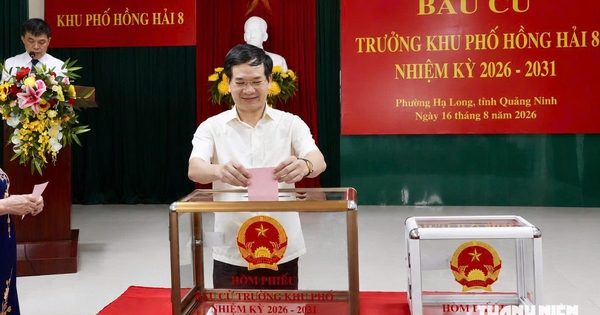
The elections are being conducted using two methods: 450 units (72.12%) are using secret ballots, while 174 units (27.88%) are voting by a show of hands. The election day, August 16, saw polling stations decorated with flags and banners, creating a solemn yet enthusiastic atmosphere as voters cast their ballots to choose representatives for their communities.
The election of village, hamlet, and neighborhood leaders is considered one of the important steps to consolidate the apparatus at the grassroots level, stabilize operations after the arrangement, and promote the role of community self-governance.
DistantNews Editorial
Originally published by Thanh Niên in Vietnamese. Translated, summarized, and contextualized by our editorial team with added local perspective. Read our editorial standards.
More Stories


From Our Blog

What Gets Lost (and Found) When News Is Translated

The Critical Role of Diaspora Media in Global News

What Travellers Should Know About Countries with Restricted Press

A Digital Nomad's Guide to Following Local News

How the Same Story Looks Different in Different Countries
