

Pakistan-China Pharma Conference Concludes with $850 Million in Agreements
Translated from English, summarized and contextualized by DistantNews.
At a glance
News
Named sources
New plan
- Pakistan and Chinese companies finalized agreements worth $850 million at a two-day pharmaceutical and healthcare conference in Islamabad.
- The finalized deals include 16 contracts and 80 Memoranda of Understanding (MoUs), with 18 agreements specifically related to herbal medicines.
- The conference aimed to foster cooperation, encourage local production of health equipment and medicines, and strengthen Pakistan's pharmaceutical industry through Chinese investment and technology transfer.
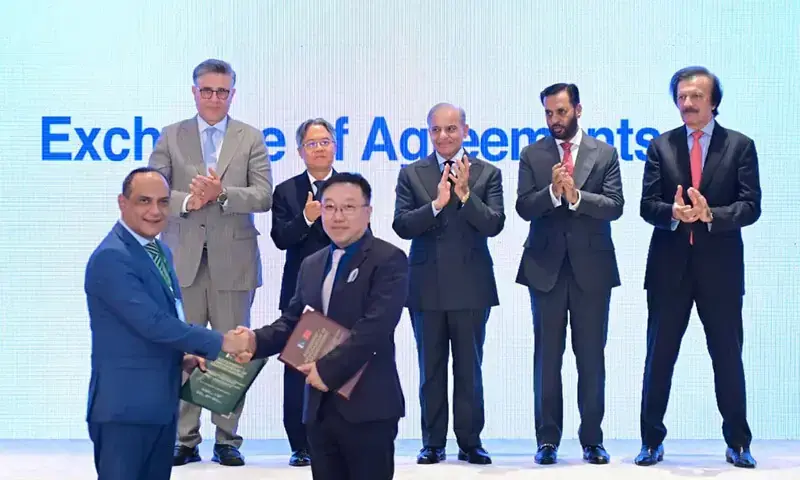
Pakistan and Chinese companies have signed agreements totaling $850 million at the conclusion of a two-day Pakistan-China Pharmaceutical and Healthcare B2B Investment Conference in Islamabad. Federal Health Minister Mustafa Kamal announced that 16 contracts and 80 Memoranda of Understanding (MoUs) were finalized during the event, highlighting it as a significant economic milestone for bilateral cooperation in the pharmaceutical sector.
He termed it a key economic milestone for cooperation between the two countries in the pharmaceutical sector.
Of the total value, contracts amounted to $600 million and MoUs to $250 million. Notably, 18 of these agreements focus on herbal medicines. The conference successfully created an environment conducive to local production of health equipment and attracted investment into Pakistan's healthcare industry. Minister Kamal welcomed the growing business-to-business ties and Chinese investment as crucial steps toward strengthening the nation's pharmaceutical sector.
He stressed that establishing local vaccine manufacturing was a priority, projecting that the cost of imported vaccines could reach $1.2bn by 2030.
A key priority discussed was local vaccine production, as Pakistan currently imports 13 different vaccines, a cost projected to reach $1.2 billion by 2030. Local manufacturing is expected to reduce import reliance and save foreign exchange. The agreements also address the domestic production of pharmaceutical raw materials, of which Pakistan imports 90%. This initiative is anticipated to lower medicine prices for the public.
He said local production would lower medicine prices and directly benefit the Pakistani public.
Discussions also covered the local manufacturing of medical devices, the promotion of clinical trials, and vocational training within the pharmaceutical sector. The Drug Regulatory Authority of Pakistan has digitalized over 80% of its services, simplifying the license application process to 20 days. The World Health Organization has recognized Pakistan's laboratories for drug testing, further bolstering the industry's credibility. The large turnout of Chinese companies underscored Pakistan's pharmaceutical capabilities and the potential for job creation, technology transfer, and foreign exchange earnings.
The event was attended by 146 Chinese companies comprising around 220 delegates and more than 200 Pakistani companies, creating one of the largest Pakistan-China business engagements in the pharmaceutical, healthcare
DistantNews Editorial
Originally published by Dawn in English. Translated, summarized, and contextualized by our editorial team with added local perspective. Read our editorial standards.
More Stories
From Our Blog

What Gets Lost (and Found) When News Is Translated

The Critical Role of Diaspora Media in Global News

What Travellers Should Know About Countries with Restricted Press

A Digital Nomad's Guide to Following Local News

How the Same Story Looks Different in Different Countries
