


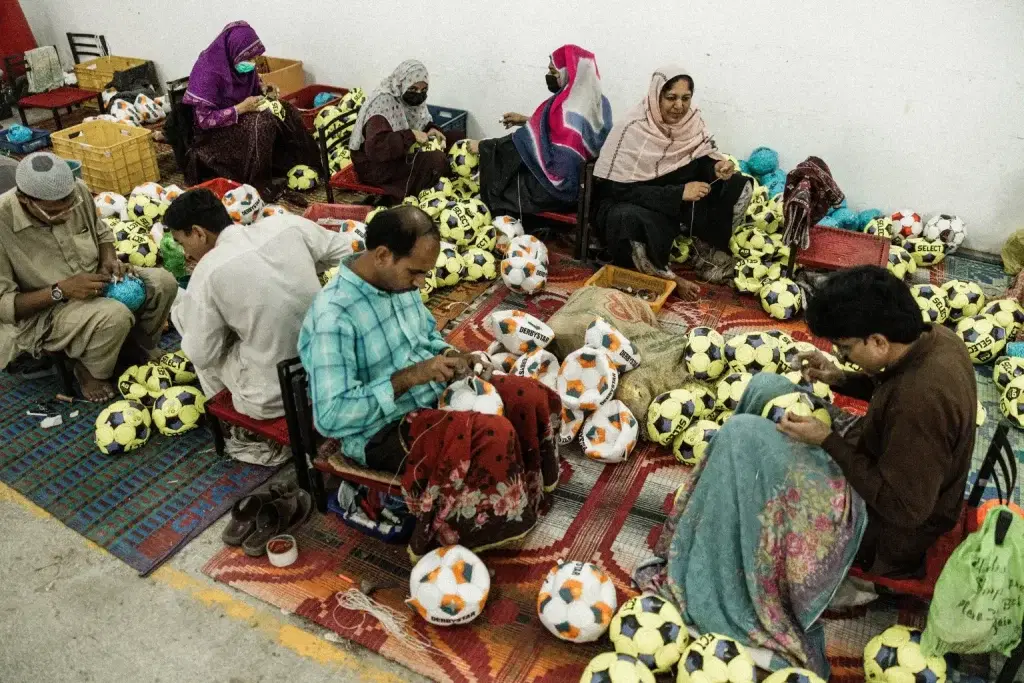
Pakistan city makes 70% of world's footballs, including World Cup ball
Translated from English, summarized and contextualized by DistantNews.
At a glance
News
Named sources
Context piece
- Sialkot, Pakistan, produces an estimated 70% of the world's footballs, including the official match ball for the FIFA World Cup.
- The city has a century-long history of football manufacturing, with millions of balls exported annually.
- Despite large-scale production, many footballs are still hand-stitched, a skilled craft requiring months of training.
The Pakistani city of Sialkot has emerged as an unlikely global powerhouse in the sports manufacturing industry, particularly for footballs. It is estimated that the city produces a staggering 70% of the world's footballs, including the official match ball for the FIFA World Cup.
Sialkot's deep connection to football manufacturing spans over a century. What began as a local hobby of repairing footballs has evolved into a major industry, now employing thousands and exporting around 40 million footballs each year. The city has been the manufacturing hub for every FIFA World Cup ball since 1982, solidifying its decades-long role in the sport's premier event.
Knowing that around 300,000 balls leave these factories every day makes you pause and wonder where they all end up
This year, Sialkot, through its leading manufacturer Forward Sports, produced the official match ball for the 2026 FIFA World Cup, named the Trionda. The company anticipates 2026 will mark the largest ball production volume in its history. Photographer Stefan Bohrer described the scale of production as astonishing, noting that approximately 300,000 balls leave these factories daily.
Despite the immense volume, the production process remains highly skilled and labor-intensive. Workers meticulously stitch football panels by hand, with experienced artisans completing about four balls per day. This craft demands months of mastery to achieve the precision required for perfect panel and seam alignment. Colors and logos are also applied manually before assembly, followed by rigorous inspections to ensure quality standards are met.
The craft can take months to master, requiring workers to develop the precision needed to ensure that every panel and seam is correctly positioned.
DistantNews Editorial
Originally published by Vanguard in English. Translated, summarized, and contextualized by our editorial team with added local perspective. Read our editorial standards.
More Stories


From Our Blog

How the Same Story Looks Different in Different Countries

What Gets Lost (and Found) When News Is Translated

The Critical Role of Diaspora Media in Global News

What Travellers Should Know About Countries with Restricted Press

A Digital Nomad's Guide to Following Local News
