


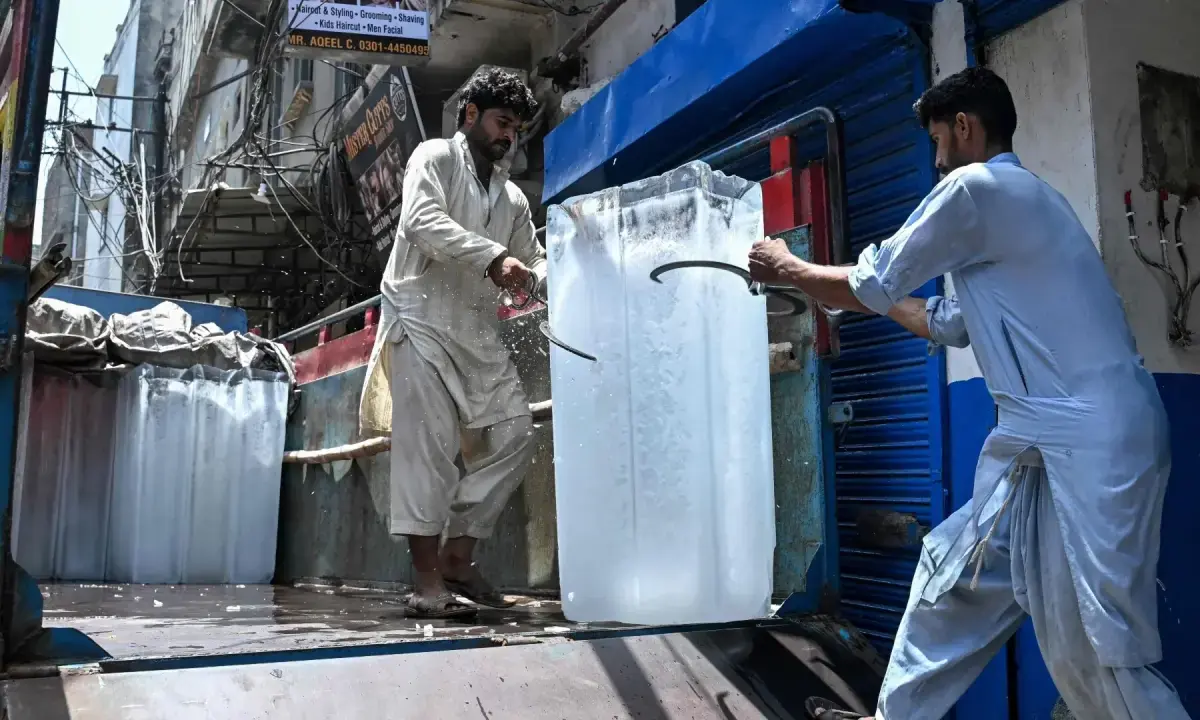
Pakistan faces amplified heat deaths due to lack of cooling access, study warns
Translated from English, summarized and contextualized by DistantNews.
At a glance
News
Documents & data
Context piece
- Extreme heat and lack of cooling systems could cause 430,000 additional deaths annually by 2050, according to a University of Chicago study.
- Pakistan is particularly vulnerable, with 89% of its population potentially facing a 'mortality-cooling trap' leading to over 150,000 heat-related deaths annually by 2050.
- Poor countries lack the resources for cooling systems, making them ten times more susceptible to heat-related mortality than wealthier nations.
A significant portion of Pakistan's population is trapped in a dangerous combination of extreme heat and insufficient access to cooling, a situation that could lead to a substantial increase in annual deaths. A study by the Climate Impact Lab, based at the University of Chicago, projects that climate-driven temperature changes will cause approximately 430,000 more deaths globally each year by 2050.
The study identifies 18 countries, home to 676 million people, as being in a 'mortality-cooling trap' (MCT). These nations, primarily low-income or lower-middle-income countries in northern sub-Saharan Africa and southern Asia, will face an estimated 377,000 annual deaths due to warmer temperatures by 2050. Pakistan, Bangladesh, Nepal, and Myanmar are among the most affected in southern Asia.
These countries face energy affordability constraints, limiting their ability to power essential cooling systems. For instance, Niger's projected increase in electricity use per person is a fraction of Saudi Arabia's, and Niger is expected to experience 27,000 more annual heat-related deaths by 2050 compared to its wealthier counterpart. The study highlights that many large cities in these MCT countries will see electricity consumption below the global median while experiencing significant increases in temperature-related mortality.
In Pakistan, an estimated 89% of the population could reside in affected regions, facing an additional 57 temperature-related deaths per 100,000 people. This deadly combination of extreme heat and limited access to air conditioning could result in over 150,000 additional deaths annually in Pakistan alone by 2050. Researchers emphasized that identifying these high-risk areas allows for targeted interventions to save lives.
We've identified the places most at risk of seeing more people die from the heat and least able to power up ACs to save them, so people and governments can zero in on saving the greatest number of lives.
DistantNews Editorial
Originally published by Dawn in English. Translated, summarized, and contextualized by our editorial team with added local perspective. Read our editorial standards.
More Stories

From Our Blog

What Gets Lost (and Found) When News Is Translated

The Critical Role of Diaspora Media in Global News

What Travellers Should Know About Countries with Restricted Press

A Digital Nomad's Guide to Following Local News

How the Same Story Looks Different in Different Countries
