


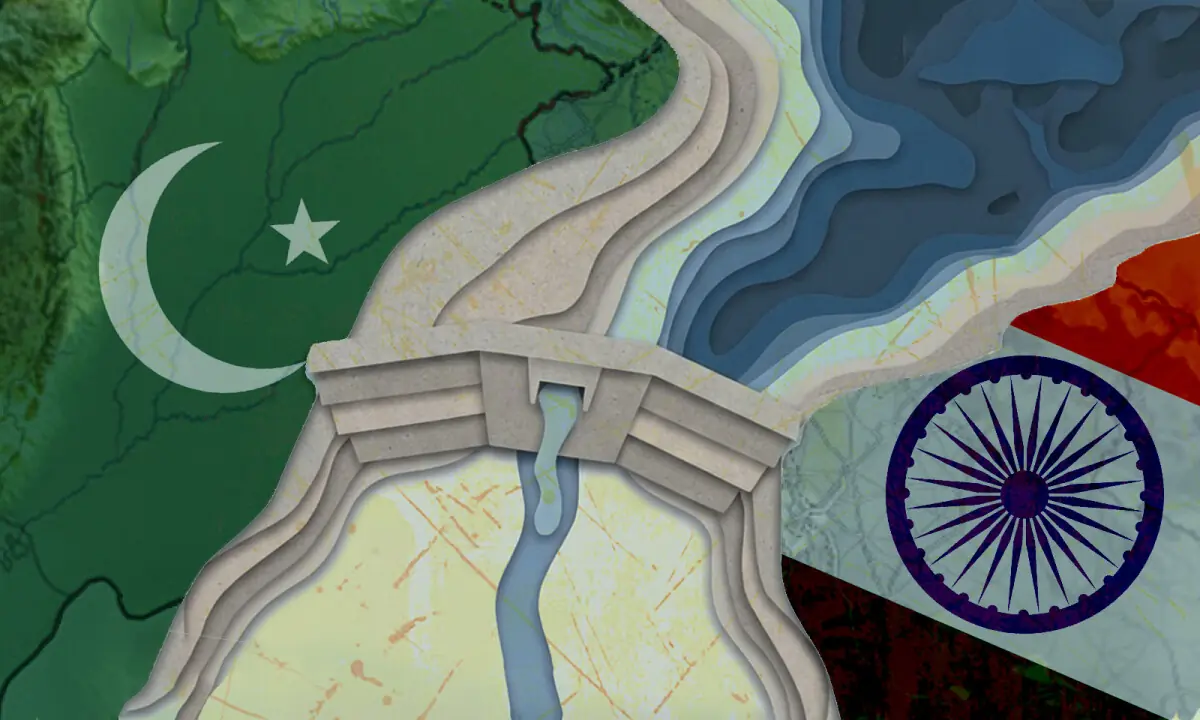
Why the Indus Waters Treaty must not be allowed to fail
Summarized and contextualized by DistantNews.
At a glance
Analysis
Named sources
Context piece
- The Indus Waters Treaty, signed in 1960, is a crucial test for international law and treaty-based cooperation.
- The treaty established the Permanent Indus Commission to manage water disputes between India and Pakistan, surviving three wars.
- India's recent declaration placing the treaty in abeyance, following a terror attack, lacks basis in international water law.
The future of international law and treaty-based cooperation is being tested by the current situation surrounding the Indus Waters Treaty, according to observations made in Islamabad. What began as a bilateral water dispute between nuclear-armed neighbors India and Pakistan is now seen as a critical examination of whether global cooperative frameworks can endure current geopolitical challenges.
During a seminar on the Indus Waters Treaty at the Jinnah Convention Centre in Islamabad, a high-level gathering of scholars, practitioners, diplomats, and policymakers convened. The expertise present was formidable, and the urgency surrounding the issue was palpable. The panel, tasked with examining treaty-based conflict prevention, focused on how institutional mechanisms within international river agreements prevent water from becoming a source of conflict.
An "outside eye" observing various river basins, including the Danube, Mekong, and Indus, revealed an alarming pattern: conflict often arises not from water itself, but from the absence of effective institutions. The International Commission for the Protection of the Danube River, spanning 15 nations, exemplifies successful cooperation through regular technical working group meetings and data sharing, which resolve differences before they escalate politically. Conversely, the Mekong River Commission's experience shows that withholding hydrological data can incite regional conflict.
The Indus Waters Treaty, signed in 1960 after extensive World Bank-mediated negotiations, provides not only a water allocation framework but also an institution: the Permanent Indus Commission. Staffed by senior engineers with diplomatic standing, this commission is mandated to meet regularly, conduct joint inspections, and utilize a tiered dispute resolution process. This architecture has proven remarkably resilient, surviving three wars and numerous crises.
However, India's declaration in April 2025 to place the Treaty in abeyance, following the Pahalgam terror attack, is viewed as having no basis in international water law. The 1997 UN Watercourses Convention, which codifies principles of international water law, does not support such unilateral actions. The treaty's survival thus far is a testament to its robust institutional design, making the current challenge particularly serious for the future of international water governance.
DistantNews Editorial
Originally published by Dawn. Summarized and contextualized by our editorial team with added local perspective. Read our editorial standards.
More Stories


From Our Blog

What Gets Lost (and Found) When News Is Translated

The Critical Role of Diaspora Media in Global News

What Travellers Should Know About Countries with Restricted Press

A Digital Nomad's Guide to Following Local News

How the Same Story Looks Different in Different Countries
