


Pakistan's Female Workforce Puzzle: Why Social Approval Misconceptions Hold Back Employment
Translated from English, summarized and contextualized by DistantNews.
At a glance
Analysis
Sources not specified
Context piece
- Despite significant gains in female education and falling fertility rates in Pakistan, female labor force participation has remained stagnant at around 22-25% for years.
- This contrasts with countries like Bangladesh, where similar improvements led to a surge in women's employment, posing a puzzle for standard economic models.
- A key, often overlooked factor is a collective misconception about social approval: individuals underestimate the extent to which others, particularly women, approve of women working outside the home.
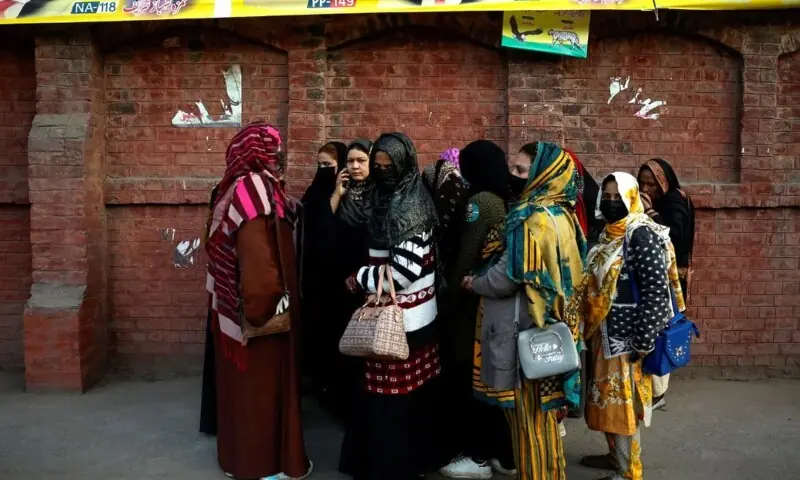
For a quarter-century, Pakistan has seen factors typically driving women's workforce participation move in the right direction. Female university enrollment has surged sixfold since 2000, fertility rates have declined, and urbanization has brought more job opportunities closer to women. Standard economic theory suggests these elements, education, smaller families, and urban labor markets, should fuel women's employment.
The engines are running but the vehicle is stationary.
However, Pakistan's female labor force participation rate has stubbornly remained between 22% and 25%, one of the lowest globally, while roughly 80% of working-age men are employed. This stagnation is puzzling, especially when compared to Bangladesh, where similar demographic shifts spurred a significant increase in women's employment, particularly in the garment sector. Pakistan possesses comparable industries and draws from similar neighborhoods, yet the expected surge in female employment has not materialized.
It is a mistake, held collectively, about what other people think.
While practical barriers like unsafe transport, poor working conditions, and job scarcity exist, a more subtle constraint appears to be at play: a collective misperception of social approval. This phenomenon, where individuals conform to what they believe others prefer, can maintain an equilibrium that few privately desire. The critical question is not what Pakistanis think about women working, but what they believe *other* Pakistanis think.
The question is not what Pakistanis think about women working. It is what Pakistanis think other Pakistanis think.
Research surveying over 8,000 individuals in Faisalabad, Lahore, and Sialkot revealed that 71% of women personally approve of women working outside the home, yet only 18% are employed. This significant gap is largely explained by the underestimation of social support. Respondents consistently underestimated the level of approval for women working, particularly among other women, indicating that communities are more accepting than their members perceive.
Seventy-one per cent of the women we surveyed personally approve of women working outside the home. Yet only 18pc are working.
DistantNews Editorial
Originally published by Dawn in English. Translated, summarized, and contextualized by our editorial team with added local perspective. Read our editorial standards.
More Stories

From Our Blog

What Gets Lost (and Found) When News Is Translated

The Critical Role of Diaspora Media in Global News

What Travellers Should Know About Countries with Restricted Press

A Digital Nomad's Guide to Following Local News

How the Same Story Looks Different in Different Countries
