


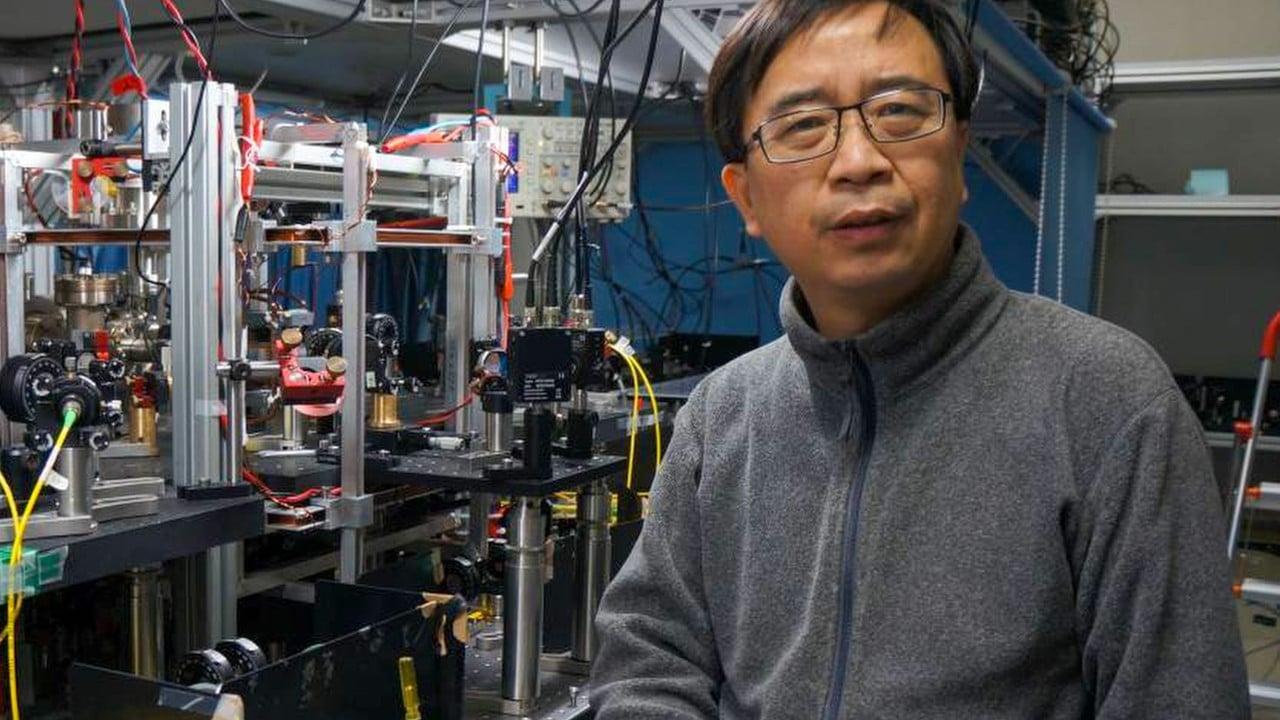
Pan Jianwei becomes first Chinese scientist to win the top UN basic science prize
Summarized and contextualized by DistantNews.
At a glance
News
Sources not specified
New plan
- Chinese quantum scientist Pan Jianwei won the UN's top fundamental science prize for his work in quantum computation and communications.
- He was honored for developing the Micius satellite, enabling secure quantum communications and demonstrating quantum computational advantage.
- Pan's team also developed Jiuzhang 4.0, a photonic quantum computer that completed a task in microseconds, which would take the most powerful supercomputer billions of years.
Pan Jianwei, a leading Chinese quantum scientist, has received the United Nations' highest award for basic science. The Unesco-Russia Mendeleev International Prize recognizes his significant contributions to secure quantum communications and scalable quantum computation.
Unesco highlighted Pan's role in developing the Micius satellite, the world's first quantum satellite launched in 2016. This satellite enabled quantum key distribution and quantum teleportation over vast distances, moving the concept of a global quantum network closer to reality. Quantum communication offers a highly secure method for information transfer, leveraging quantum mechanics to resist eavesdropping.
Pan, a physics professor at the University of Science and Technology of China (USTC), shares this year's award with Sergei Sheiko, a chemistry professor at the University of North Carolina at Chapel Hill. Sheiko is recognized for his polymer physics research that has advanced the design of soft materials.
Pan also leads the USTC team behind Jiuzhang 4.0, China's latest photonic quantum computer. In May, the team announced it completed a complex calculation in just 25 microseconds. They estimate that the world's most powerful supercomputer, El Capitan in the United States, would need over 10 to the power of 42 years to finish the same task.
His team developed the Micius satellite, enabling quantum key distribution and quantum teleportation over thousands of kilometres, and has demonstrated quantum computational advantage, bringing the prospect of a global quantum network from theory to reality.
DistantNews Editorial
Originally published by South China Morning Post. Summarized and contextualized by our editorial team with added local perspective. Read our editorial standards.
More Stories

From Our Blog

Countries Without a Free Press: What You Need to Know

What Press Freedom Means for the News You Read

What Gets Lost (and Found) When News Is Translated

The Critical Role of Diaspora Media in Global News

What Travellers Should Know About Countries with Restricted Press
