


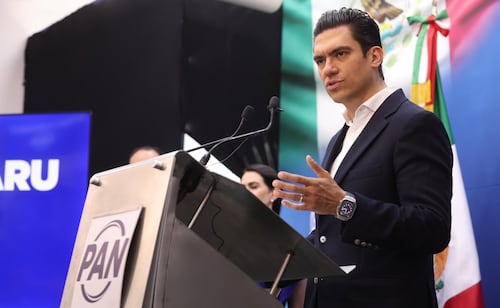
PAN proposes reforms to ensure right of reply within three days in morning press conferences; accuses journalists of censorship
Translated from Spanish, summarized and contextualized by DistantNews.
At a glance
News
Named sources
New plan
- Mexico's National Action Party (PAN) proposes reforms to combat media censorship and protect journalists.
- The reforms aim to establish a right of reply within three days for responses to official communications, including presidential press conferences.
- PAN accuses the current administration's media guidelines of being an attempt at censorship and seeks to penalize officials who harass or silence reporters.
Mexico's National Action Party (PAN) has unveiled a package of proposed reforms aimed at curbing what it describes as censorship and harassment of journalists and media outlets. The party argues that current government guidelines, particularly those related to the "Fourth Transformation" (4T) communications, constitute an attempt to silence critical voices.
Led by national leader Jorge Romero Herrera, the PAN's initiative seeks to amend Article 38 of the Mexican Constitution. The proposed changes would introduce sanctions for public officials who use state resources to intimidate, harass, denigrate, or silence citizens, civil associations, and reporters. This move signals a direct challenge to the administration's media practices.
A key component of the reform package is an amendment to the Law on the Right of Reply. The PAN proposes establishing a maximum period of three business days for authorities to respond to a request for reply. If deemed valid, the response would need to be published in the next available official communication channel, such as a press conference or broadcast. This aims to ensure timely responses to factual inaccuracies or misleading information disseminated by public entities.
The proposed legislation clarifies that the right of reply would apply exclusively to false, inaccurate, or unverifiable factual claims, excluding opinions, criticisms, or value judgments unless they contain verifiable factual assertions. The reforms also designate various public bodies, including federal and state powers, autonomous constitutional bodies, and all levels of government administration, as obligated entities subject to these regulations.
DistantNews Editorial
Originally published by El Universal in Spanish. Translated, summarized, and contextualized by our editorial team with added local perspective. Read our editorial standards.
More Stories
From Our Blog

What Press Freedom Means for the News You Read

What Gets Lost (and Found) When News Is Translated

The Critical Role of Diaspora Media in Global News

What Travellers Should Know About Countries with Restricted Press

A Digital Nomad's Guide to Following Local News
