


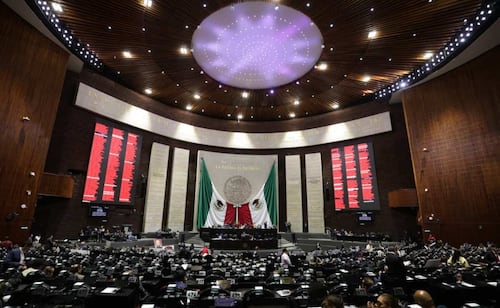
PAN proposes sanctions for 'indirect nepotism' and improper management; initiative sent to committees
Translated from Spanish, summarized and contextualized by DistantNews.
At a glance
News
Sources not specified
New plan
- Mexico's Chamber of Deputies is considering a reform to the General Law of Administrative Responsibilities to address indirect nepotism and improper management.
- The proposed initiative aims to prevent public power from being inherited or managed within families, even without formal appointments.
- It seeks to sanction indirect nepotism and improper management as serious administrative offenses, thereby safeguarding hiring and resource allocation processes.
Mexico's Chamber of Deputies is reviewing a proposed reform to the General Law of Administrative Responsibilities that aims to combat indirect nepotism and improper management by public officials. The initiative, put forth by the National Action Party (PAN), seeks to prevent public power from being inherited or managed within families, even in the absence of formal appointments.
The proposal defines "indirect nepotism" as a situation where a public servant permits, tolerates, requests, or benefits from improper management by a connected person, even if that person does not hold a formal position. "Improper management" is defined as intervention, intermediation, pressure, or influence exerted directly or indirectly to affect decisions, processes, contracts, appointments, or resource allocations without legal authority, by leveraging a relationship with a public servant.
Federal Deputy Marcelo de Jesús Torres of PAN explained that the reform aims to shield hiring and resource allocation processes from "family capture." The goal is to prevent public power from being passed down or managed within families, to ensure transparency in relevant connections, and to scrutinize actions taken by individuals linked to officials.
The initiative also addresses "family capture of the state," characterized by a repeated pattern of public decisions influenced by connected individuals who concentrate real power or public benefits within a family or cohabitation network. The reform seeks to classify indirect nepotism and improper management as serious administrative offenses.
DistantNews Editorial
Originally published by El Universal in Spanish. Translated, summarized, and contextualized by our editorial team with added local perspective. Read our editorial standards.
More Stories



From Our Blog

What Press Freedom Means for the News You Read

What Gets Lost (and Found) When News Is Translated

The Critical Role of Diaspora Media in Global News

What Travellers Should Know About Countries with Restricted Press

A Digital Nomad's Guide to Following Local News
