


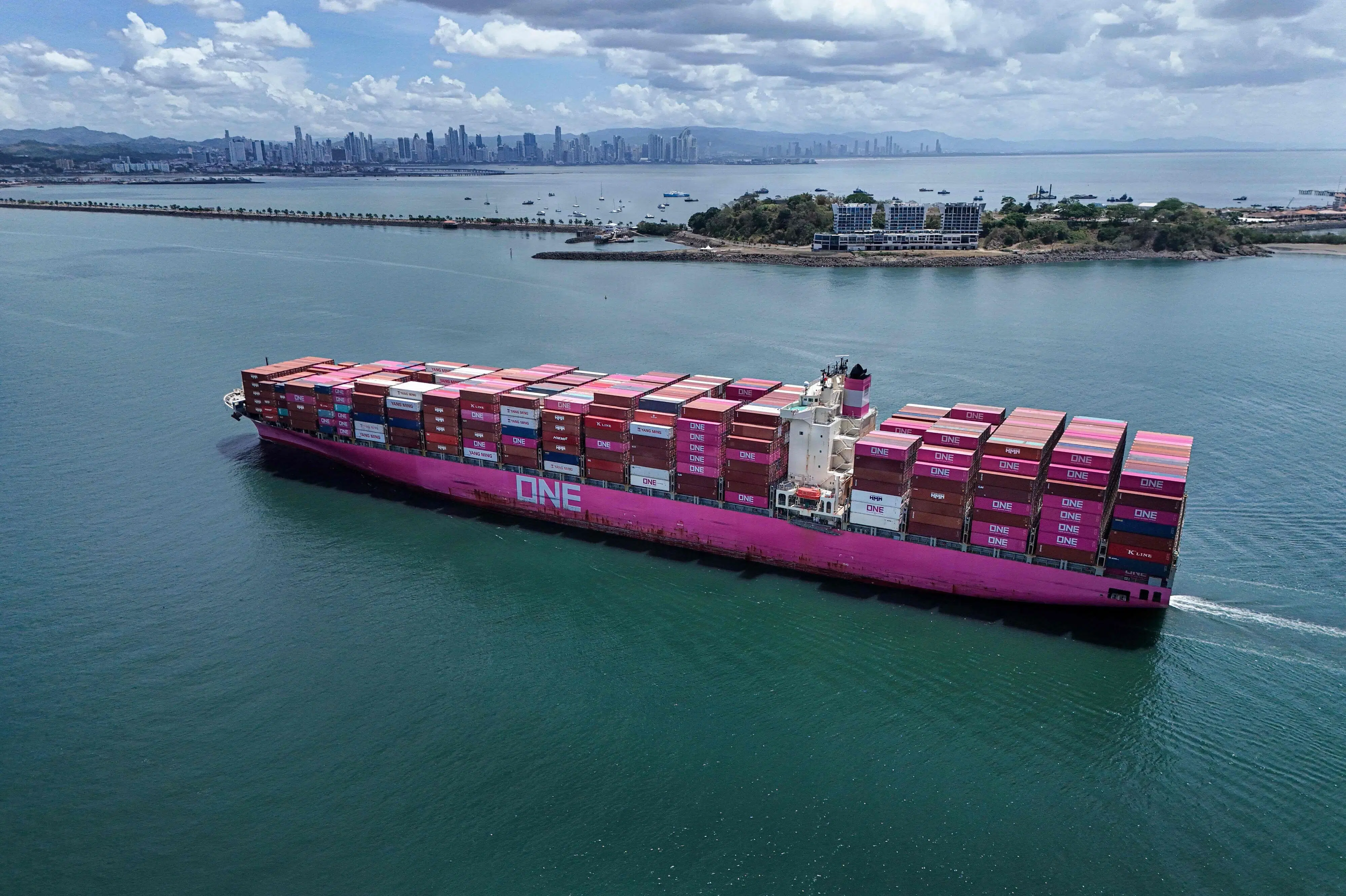
Panama Canal to reduce ship traffic due to drought
Translated from Danish, summarized and contextualized by DistantNews.
At a glance
News
From a news agency
Context piece
- The Panama Canal Authority will reduce the number of daily ship transits due to drought conditions caused by the El Niño phenomenon.
- Starting September 3, daily transits will decrease from 36 to 34, and from September 15, to a maximum of 32 ships.
- Rainfall in the canal's watershed has been significantly below average, leading to low water levels in the artificial lakes that supply the canal, impacting global trade.
The Panama Canal Authority announced it will reduce the number of daily ship transits due to severe drought conditions linked to the El Niño weather phenomenon. This measure is expected to impact global shipping, as the canal is a critical artery for international trade.
Beginning September 3, the number of ships allowed to pass through the canal daily will be lowered from 36 to 34. This will be further reduced to a maximum of 32 ships per day starting September 15. The authority cited significantly below-average rainfall in the canal's watershed between May and August, which has led to critically low water levels in the Gatun and Alajuela lakes, the primary water sources for the canal.
To conserve water, the authority has already implemented several water-saving measures and imposed restrictions on the maximum draft for the largest container ships. These actions underscore the severity of the drought's impact on the canal's operations. The Panama Canal facilitates passage for approximately 5% of the world's maritime trade, with the United States and China being its largest users.
This is not the first time the canal has faced operational challenges due to water levels. In 2023, low water levels forced a reduction in daily transits from 38 to 22 ships. The canal's strategic importance lies in its ability to connect the Atlantic and Pacific Oceans, allowing vessels to bypass the lengthy and hazardous route around the southern tip of South America, making it indispensable for international maritime traffic.
DistantNews Editorial
Originally published by Berlingske in Danish. Translated, summarized, and contextualized by our editorial team with added local perspective. Read our editorial standards.
More Stories



From Our Blog

What Gets Lost (and Found) When News Is Translated

The Critical Role of Diaspora Media in Global News

What Travellers Should Know About Countries with Restricted Press

A Digital Nomad's Guide to Following Local News

How the Same Story Looks Different in Different Countries
