


Panama Geosciences Institute: Global Earthquake Activity Remains Normal
Translated from Spanish, summarized and contextualized by DistantNews.
At a glance
News
Sources not specified
Context piece
- Panama's Institute of Geosciences states global seismic activity remains within expected parameters despite recent significant earthquakes in the region.
- Statistics show no unusual increase in earthquakes of magnitude 7.0-7.9 globally over the past few years.
- The region's seismic activity is attributed to its location on the tectonically active Pacific Ring of Fire.
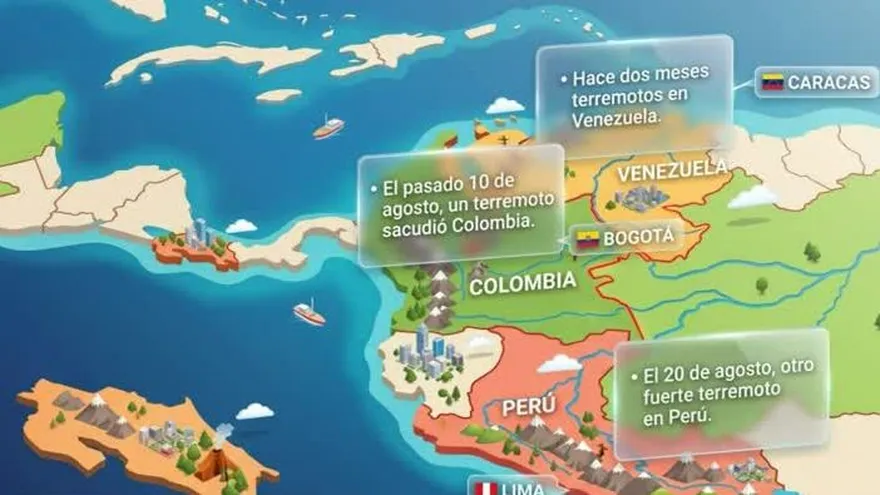
Despite a recent series of noticeable earthquakes across Latin America, Panama's Institute of Geosciences asserts that global seismic activity is currently within normal ranges. The perception of increased tremors has grown following significant events, including a magnitude 7.4 earthquake in Colombia on August 10 and a quake in Peru on August 20, with Costa Rica also registering notable seismic movements.
However, available statistics do not indicate an unusual surge in seismic events. Globally, 15 earthquakes between magnitudes 7.0 and 7.9 were recorded in 2024 and the same number in 2025. So far in 2026, 11 earthquakes have fallen within this range. Néstor Luque, director of the Institute of Geosciences at the University of Panama, explained that major earthquakes often trigger numerous aftershocks as the earth settles from the release of significant energy.
Globally, we are staying within the statistics or average of what normally occurs in the world. When there is a large magnitude event, it will generate a lot of aftershocks because they will continue to adjust due to the vibration of a large amount of energy.
Luque attributed the region's notable seismic activity to its position along the Pacific Ring of Fire, a zone where multiple tectonic plates interact. This interaction causes large amounts of energy to build up over time, which is eventually released through seismic movements. "This is an area where tectonic plates accumulate a lot of force over time and then release that energy when they reach their limit," Luque stated.
Panama itself is not exempt from this geological dynamic. The institute confirmed that recent tremors within the country are consistent with expected seismic parameters. While Panama experiences less seismic activity than some areas directly on the Ring of Fire, its territory is still subject to movements resulting from the interaction of tectonic plates and active geological structures. The institute also noted that predicting the exact timing of earthquakes remains impossible.
In this case, with those plates, that's where the most force accumulates over time and then releases that energy when the limit is reached. It is a tectonically active area, which is why these earthquakes occur.
DistantNews Editorial
Originally published by TVN Panamá in Spanish. Translated, summarized, and contextualized by our editorial team with added local perspective. Read our editorial standards.
More Stories


From Our Blog

What Gets Lost (and Found) When News Is Translated

The Critical Role of Diaspora Media in Global News

What Travellers Should Know About Countries with Restricted Press

A Digital Nomad's Guide to Following Local News

How the Same Story Looks Different in Different Countries
