

Panama's president details inherited fiscal and institutional crisis
Translated from Spanish, summarized and contextualized by DistantNews.
At a glance
News
Named sources
Context piece
- Panamanian President José Raúl Mulino presented his second-year government report, detailing the financial and institutional challenges inherited upon taking office.
- Mulino stated the administration found a country with a fiscal crisis and institutional disorder, which eroded market and public confidence.
- He emphasized that restoring confidence is crucial for Panama's development model, which relies on foreign investment, credit, trade, and tourism.
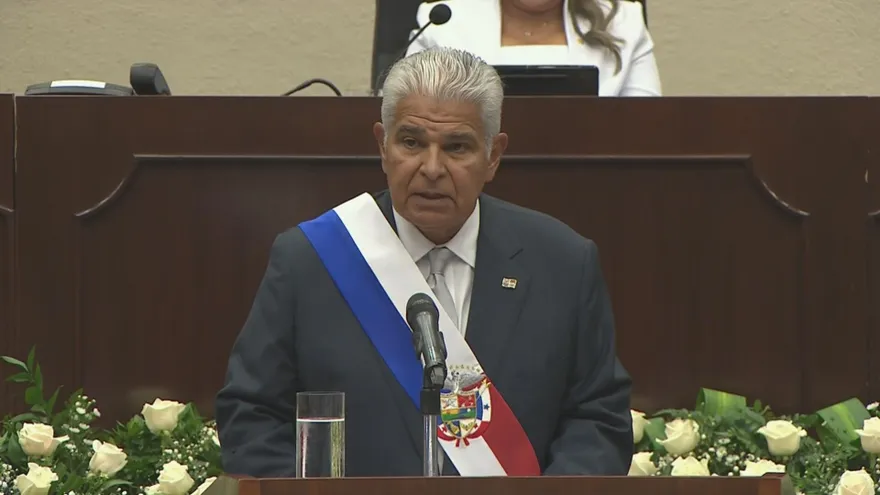
Panamanian President José Raúl Mulino used his second-year government report to outline the dire financial and institutional landscape his administration inherited. Mulino described a situation where the fiscal crisis surpassed his team's initial estimates, compounded by a profound institutional disarray that had crippled the state's ability to function effectively.
"We received a disordered state and institutions that had lost their capacity for execution," Mulino stated, emphasizing that the most damaging aspect was not the numbers but the significant loss of confidence among markets and citizens. He asserted that Panama's development model fundamentally depends on international reputation and internal stability, with confidence being the primary driver for key sectors like foreign investment, credit, commerce, logistics, and tourism.
Mulino recounted that his administration rejected traditional austerity measures due to their high social cost, particularly for vulnerable populations such as the elderly, mothers, and students. He also dismissed the option of raising taxes, arguing that such a move would disproportionately burden workers, entrepreneurs, the middle class, small businesses, and national producers.
"For the model of country we have built, Panama lives on its confidence. When the good name disappears, that's where we stop, everything halts," Mulino warned, directly linking macroeconomic stability to the employment and well-being of Panamanian families. His address focused on the proposals presented by economic consultants and business sectors during his early days in office, highlighting the difficult choices made to balance public finances without resorting to measures he deemed socially detrimental or overly burdensome on the populace.
DistantNews Editorial
Originally published by TVN Panamá in Spanish. Translated, summarized, and contextualized by our editorial team with added local perspective. Read our editorial standards.
More Stories



From Our Blog

What Gets Lost (and Found) When News Is Translated

The Critical Role of Diaspora Media in Global News

What Travellers Should Know About Countries with Restricted Press

A Digital Nomad's Guide to Following Local News

How the Same Story Looks Different in Different Countries
