


Panama sees fewer whales, warns against risky close encounters
Translated from Spanish, summarized and contextualized by DistantNews.
At a glance
News
Named sources
Context piece
- Fewer whales are arriving in Panamanian waters this season, increasing pressure from boats on the existing cetaceans.
- The Ministry of Environment (MiAmbiente) reiterated that swimming with whales is prohibited due to risks to both animals and people.
- An incident where a person swam near a humpback whale in the Pearl Islands has prompted an investigation.
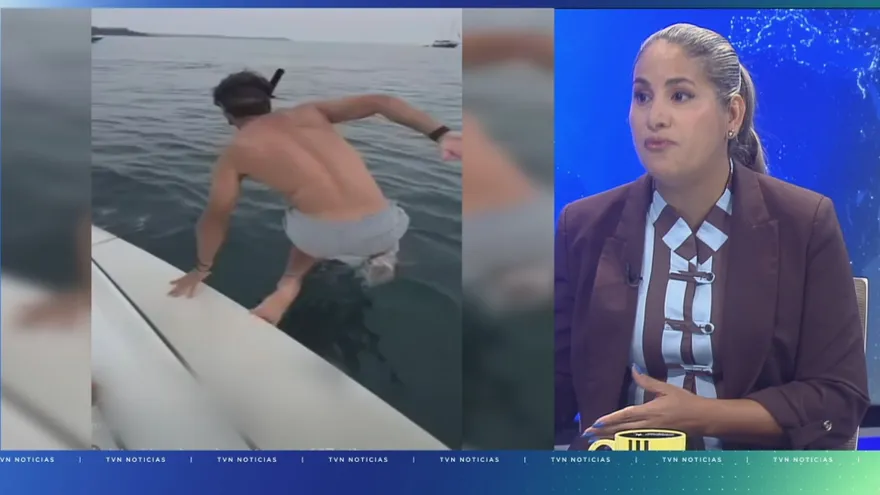
Panama is experiencing a noticeable decrease in whale arrivals during the current sighting season, a trend that is raising concerns at the Ministry of Environment (MiAmbiente). Digna Barsallo, director of Coasts and Seas at MiAmbiente, warned that this scarcity is intensifying the pressure from vessels on the whales present in Panamanian waters.
"Because fewer species of whales are arriving in our waters, we have greater pressure from the vessels that are carrying out this sighting," Barsallo stated. The whale watching season typically runs from July to October, a period when whales migrate from the southern continent to Panama's warmer waters to reproduce and give birth. The increased boat traffic around fewer whales poses a significant risk to the animals.
Because fewer species of whales are arriving in our waters, we have greater pressure from the vessels that are carrying out this sighting.
MiAmbiente's warning comes after images circulated of an incident in the Pearl Islands archipelago where an individual entered the water near a humpback whale. Barsallo clarified that the vessel involved did not belong to a tour operator and was likely a private boat, possibly rented or owned by its occupants. MiAmbiente has initiated a process regarding this incident following an initial report.
Swimming, diving, feeding, or attempting to touch these animals is prohibited.
Barsallo took the opportunity to remind the public of the regulations governing whale watching in Panama. These rules strictly prohibit swimming, diving, feeding, or attempting to touch cetaceans. Vessels are required to maintain a distance of 250 meters from whales and 100 meters from dolphins. Their movement must be parallel to the cetacean, adhering to established conditions. The regulations permit a maximum of two vessels around the animals for 30 minutes, reduced to 15 minutes when a calf is present, to minimize disturbance.
Violating these measures can disrupt crucial biological processes for cetaceans, including reproduction, birth, and calf-rearing. The restrictions also serve to protect human safety, as males can exhibit aggressive behavior during mating season. MiAmbiente stressed that adherence to these guidelines is essential for the conservation of these marine mammals and the safety of all involved.
Vessels must maintain a distance of 250 meters from whales and 100 meters from dolphins.
DistantNews Editorial
Originally published by TVN Panamá in Spanish. Translated, summarized, and contextualized by our editorial team with added local perspective. Read our editorial standards.
More Stories


From Our Blog

What Gets Lost (and Found) When News Is Translated

The Critical Role of Diaspora Media in Global News

What Travellers Should Know About Countries with Restricted Press

A Digital Nomad's Guide to Following Local News

How the Same Story Looks Different in Different Countries
