

PASOK and Tsipras: From Prespes to Kastellorizo in Political Chess
Translated from Greek, summarized and contextualized by DistantNews.
TLDR
- PASOK and Alexis Tsipras's political movements are creating a complex political landscape ahead of the announcement of Tsipras's new party.
- A recent event highlighted differing views on the Prespes Agreement, with Athens Mayor Haris Doukas supporting it and PASOK's historical stance being more reserved.
- Tsipras referenced the 2010 Kastellorizo statement, linking the start of the economic crisis to a previous PASOK government, sparking debate about historical responsibilities and current political positioning.
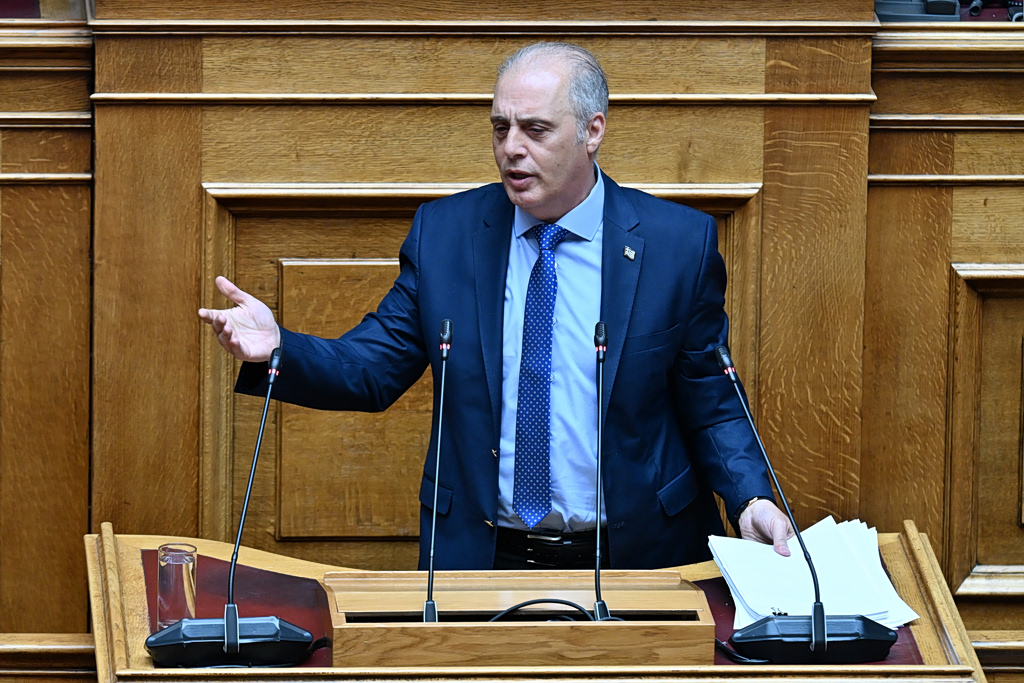
The political arena in Greece is currently a chessboard, with movements and counter-movements from various progressive factions, even before Alexis Tsipras officially unveils his new party. The recent interaction between former Prime Minister Tsipras and Athens Mayor Haris Doukas at a book presentation underscored the subtle yet significant divides within the center-left.
I don't think that after 10 years, in our space, one raises the issue of this Agreement, that it must move forward and how important it is.
Doukas's acknowledgment of Giannis Boutaris's positive stance on the Prespes Agreement, a deal championed by Tsipras's SYRIZA government but not supported by PASOK, raised eyebrows. Doukas, however, clarified his position, stating that the agreement is a settled matter and emphasizing his goal for PASOK to emerge as the leading party. This stance was met with a characteristically measured, yet pointed, response from Tsipras, who welcomed any "convergence and approach."
However, the past continues to cast a long shadow, particularly concerning the handling of the economic crisis and the associated austerity measures. Tsipras's reference to the 2010 Kastellorizo statement, which he used to pinpoint the beginning of the crisis to a PASOK-led government rather than the Karamanlis administration, serves as a strategic move. By highlighting the significant deposit outflows during the preceding years, he aims to reframe the narrative of responsibility, implicitly challenging PASOK's historical role and seeking to diminish his own party's perceived culpability.
Any convergence and any approach is welcome.
PASOK officials, in turn, interpret Tsipras's remarks about previous governments' failures to complete programs as an attempt to "offset" responsibilities and deflect from SYRIZA's own role in obstructing program completion. This exchange reflects a broader "cold war" dynamic as both sides vie for a similar electorate. From our perspective at Ta Nea, this is not just about historical revisionism; it's about the present and future of progressive politics in Greece, and how these historical narratives are being weaponized in the ongoing struggle for political relevance.
Some think we are in the land of the Lotus-Eaters (...) and we don't remember that the crisis in this country did not start on January 25, 2015. But like today, April 23, 2010. Five years before we entered the IMF, there was the famous statement in Kastellorizo.
DistantNews Editorial
Originally published by Ta Nea in Greek. Translated, summarized, and contextualized by our editorial team with added local perspective. Read our editorial standards.
More Stories

From Our Blog

What Gets Lost (and Found) When News Is Translated

The Critical Role of Diaspora Media in Global News

What Travellers Should Know About Countries with Restricted Press

A Digital Nomad's Guide to Following Local News

How the Same Story Looks Different in Different Countries
