

PDI Perjuangan Denies Orchestrating Protests, Cites Government Weakness
Translated from Indonesian, summarized and contextualized by DistantNews.
At a glance
News
Named sources
Context piece
- PDI Perjuangan Secretary-General Hasto Kristiyanto denied accusations that his party orchestrated recent demonstrations.
- He called the accusations a sign of governmental weakness and a tendency to blame others.
- Kristiyanto also commented on the decline of Indonesian democracy, citing a report on rising authoritarianism.
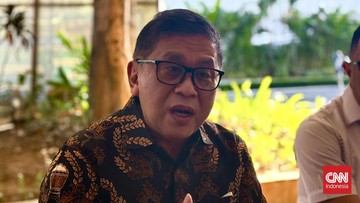
Hasto Kristiyanto, Secretary-General of Indonesia's PDI Perjuangan party, has vehemently denied claims that his party is behind a series of demonstrations across the country over the past year. Kristiyanto dismissed these accusations as a reflection of a "weak" government administration that resorts to scapegoating when faced with problems.
These various accusations against PDI Perjuangan show its weakness within our government system, so what I said earlier, it tends to justify, including when there is a problem, it tends to look for a scapegoat. That shows the nature of an authoritarian.
"These various accusations against PDI Perjuangan show its weakness within our government system, so what I said earlier, it tends to justify, including when there is a problem, it tends to look for a scapegoat. That shows the nature of an authoritarian," Kristiyanto stated on Monday. He drew parallels to the 1996 Kudatuli incident, where he claims scapegoats were sought to cover up internal power struggles.
So the same as before, July 27. A scapegoat was sought.
Kristiyanto further criticized the government's approach, suggesting it deviates from prioritizing the people's interests. He argued that the focus has shifted to maintaining the status quo of power, which he believes leads to corruption. He also expressed concern over the state of Indonesian democracy, referencing a V-Dem Institute report that suggests the country is no longer a full democracy due to tendencies toward "legal authoritarianism."
Because for example, the 1965 Cold War battle caused the PKI to be disbanded. That was an external shock. Well, if it's internal, it's also a change from the aspect of political behavior, the power behavior of the rulers because their power can corrupt.
DistantNews Editorial
Originally published by CNN Indonesia in Indonesian. Translated, summarized, and contextualized by our editorial team with added local perspective. Read our editorial standards.
More Stories


From Our Blog

What Gets Lost (and Found) When News Is Translated

The Critical Role of Diaspora Media in Global News

What Travellers Should Know About Countries with Restricted Press

A Digital Nomad's Guide to Following Local News

How the Same Story Looks Different in Different Countries
