


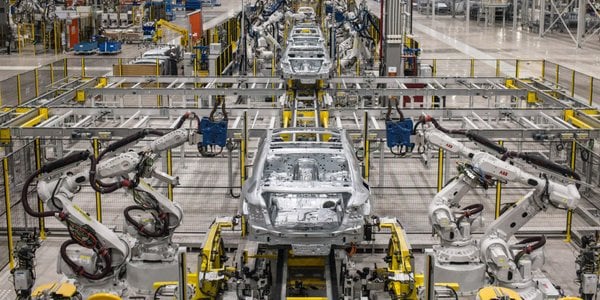
People and Robots: Factories will return, but without people
Translated from Polish, summarized and contextualized by DistantNews.
At a glance
Analysis
Sources not specified
Context piece
- A Polish article discusses Donald Trump's promise to bring back manufacturing jobs to the U.S. by imposing tariffs.
- The author argues that while companies may move production back, robots, not people, will fill the factory jobs due to lower operating costs.
- The piece contrasts this with Poland's current labor market discussions, suggesting automation is a global trend impacting all economies.
Donald Trump's promise to revive American manufacturing by bringing back jobs is being fulfilled, but not in the way his supporters might have hoped. The article "People and Robots" by Witold M. Orłowski in Rzeczpospolita explains that while Trump's threat of high tariffs has indeed compelled Japanese and European automakers to shift some production back to the U.S., these new factories will likely be operated by robots, not humans.
The threat worked, Japanese and European manufacturers are agreeing to move production to the USA, because the risk of being cut off by the largest market in the world through huge tariffs is a bigger problem for them than the increase in production costs.
Orłowski points out that the cost of an hour of labor for an industrial robot has fallen to $10-$15, significantly less than the average $60 per hour for an American autoworker. Robots, unlike human employees, do not strike, demand overtime pay, or require costly pension plans. The automotive industry, in particular, is highly susceptible to automation, with South Korea already having one robot for every three workers in the sector.
This trend directly challenges Trump's campaign pledge to restore jobs for former factory workers in places like Detroit. While factories may return, the jobs themselves are unlikely to be filled by the people who lost them. The article suggests that the escalating demands of labor unions may have contributed to the high cost of labor in the U.S., making automation an even more attractive alternative for manufacturers.
And at the same time, Donald Trump cannot keep his word. Because at the same time, while the cost of an hour of work for an American worker in the automotive industry has risen to $60, the cost of an hour of work for a robot that fully replaces a human has fallen to $10-15.
In contrast, Poland is currently focused on different labor market issues, such as self-employment changes, with unions hoping to reverse recent shifts. However, Orłowski implies that the global rise of robots, powered by artificial intelligence, is an unstoppable force that will reshape labor markets worldwide, regardless of specific national policies or union efforts.
Robots do not strike, do not charge for overtime, and do not demand further wage increases and costly pension systems.
DistantNews Editorial
Originally published by Rzeczpospolita in Polish. Translated, summarized, and contextualized by our editorial team with added local perspective. Read our editorial standards.
More Stories



From Our Blog

What Gets Lost (and Found) When News Is Translated

The Critical Role of Diaspora Media in Global News

What Travellers Should Know About Countries with Restricted Press

A Digital Nomad's Guide to Following Local News

How the Same Story Looks Different in Different Countries
