


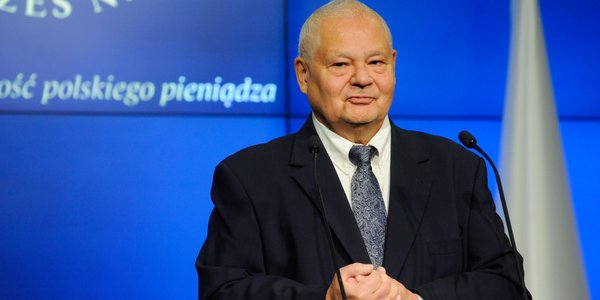
Poland's Monetary Policy Council holds interest rates steady, awaits geopolitical clarity
Translated from Polish, summarized and contextualized by DistantNews.
At a glance
News
Sources not specified
New plan
- Poland's Monetary Policy Council (RPP) kept interest rates unchanged at its July meeting, maintaining the reference rate at 3.75%.
- The decision aligns with market expectations, influenced by a recent inflation estimate of 2.5% and stable labor market data.
- Geopolitical tensions, particularly concerning oil prices, introduce uncertainty, leading the RPP to adopt a wait-and-see approach.
Poland's Monetary Policy Council (RPP) has maintained its benchmark interest rate at 3.75%, adhering to market predictions and economist forecasts. The decision at the July meeting signals a period of stability for borrowing costs in the country.
The RPP's stance is largely influenced by recent economic indicators. A preliminary inflation estimate for June came in at 2.5% year-on-year, falling within the National Bank of Poland's target range and easing concerns about rising prices. Additionally, labor market data shows moderating wage growth, with average wages in the enterprise sector increasing by only 5.8% year-on-year in May, the slowest pace in nearly five years.
In our assessment, the chances are growing that the RPP's next move could be a rate cut, but it should not be expected in the coming months. Our base scenario assumes that interest rates will remain unchanged until the end of this year.
Despite the current stability, geopolitical factors are introducing a layer of uncertainty. Fluctuations in global oil prices, driven by tensions between Iran and the United States, could impact future inflation trajectories. While current oil prices are below the highs seen earlier in the year, a renewed escalation of conflict could reignite inflationary pressures.
This geopolitical backdrop has led the RPP to adopt a cautious, wait-and-see approach. Economists from ING Bank Śląskiego suggest that while a rate cut might occur in the future, it is unlikely in the immediate months. The council is expected to monitor inflation data closely in the coming months, with geopolitical developments playing a significant role in shaping future monetary policy decisions.
The renewed escalation of the conflict and the jump in oil prices are an argument for a cautious softening of the RPP's tone. Additionally, the Council will give itself time to observe inflation in the coming months.
DistantNews Editorial
Originally published by Rzeczpospolita in Polish. Translated, summarized, and contextualized by our editorial team with added local perspective. Read our editorial standards.
More Stories



From Our Blog

What Gets Lost (and Found) When News Is Translated

The Critical Role of Diaspora Media in Global News

What Travellers Should Know About Countries with Restricted Press

A Digital Nomad's Guide to Following Local News

How the Same Story Looks Different in Different Countries
