


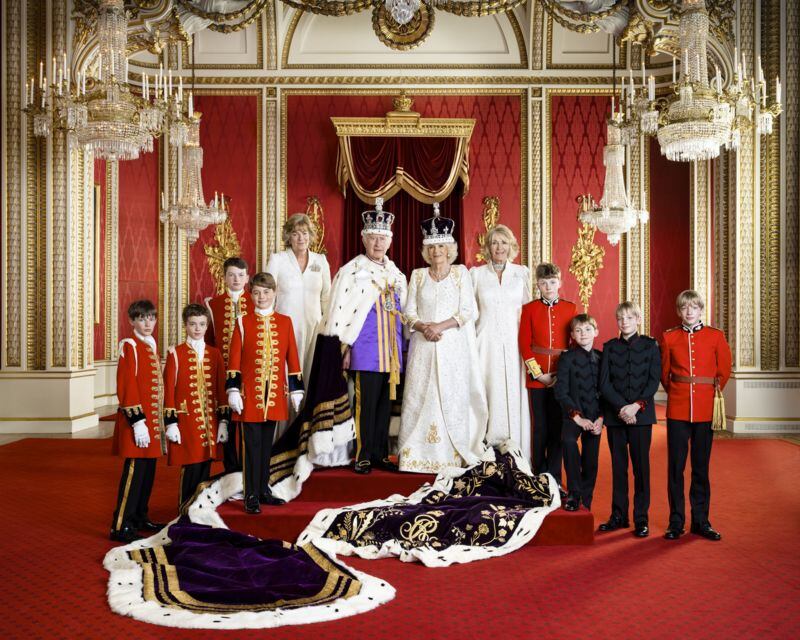
People with these surnames could descend from European royalty
Translated from Spanish, summarized and contextualized by DistantNews.
At a glance
News
Sources not specified
Context piece
- Millions of people may be unknowingly linked to European royalty through shared surnames, according to family history studies.
- A recent compilation by MyHeritage identified 35 surnames that suggest possible ancestral connections to influential European lineages.
- These connections stem from historical intermarriage among royal families, with many branches eventually adopting common professions and losing direct courtly ties.
The idea of descending from European royalty, once considered distant or anecdotal, is now suggested by numerous family history studies. A recent compilation by the global platform MyHeritage indicates that millions might be connected to royal houses without realizing it.
While possessing one of the 35 identified surnames isn't definitive proof of direct ancestry, it serves as a strong indicator of potential ancestral links to influential European lineages that shaped the continent's history. This phenomenon is attributed to the intricate web of marriages royal families established over centuries. As generations passed, many family branches moved away from courtly life, taking up common professions like trade, farming, or teaching, which diluted their original status.
The list of surnames compiled by MyHeritage includes those from politically significant dynasties. Among them are the Windsors, the current British royal family's surname since 1917, as well as the Tudors, Stuarts, Plantagenets, and Hanoverians. European lineages like the Romanovs, Russia's last imperial dynasty, and the Habsburgs, who ruled the Holy Roman Empire, are also featured. Additionally, historically influential noble families such as the Howards, Spencers, Nevilles, Percys, Cavendishes, and Seymours are included.
The origins of these surnames are varied, often tied to specific roles or functions. For instance, the surname Spencer derives from the medieval term 'dispensator' or 'despenser,' originally denoting an administrator in aristocratic households. The history of the Windsor name is also strategic; before 1917, the British royal family lacked a formal surname. King George V adopted 'Windsor' to distance the family from German roots, specifically the House of Saxe-Coburg-Gotha, amidst strong anti-German sentiment following World War I.
Modern genealogy increasingly utilizes DNA testing to explore these connections. Reports indicate a considerable number of individuals have discovered royal links through their family history research. MyHeritage explains that DNA sequencing provides a powerful tool for uncovering these ancestral ties, bridging the gap between historical records and personal lineage.
DistantNews Editorial
Originally published by La Nación in Spanish. Translated, summarized, and contextualized by our editorial team with added local perspective. Read our editorial standards.
More Stories


From Our Blog

What Gets Lost (and Found) When News Is Translated

The Critical Role of Diaspora Media in Global News

What Travellers Should Know About Countries with Restricted Press

A Digital Nomad's Guide to Following Local News

How the Same Story Looks Different in Different Countries
