


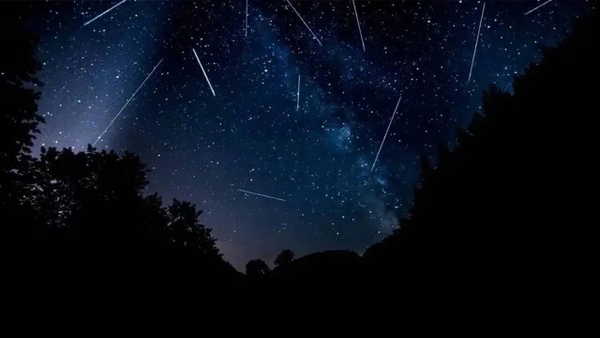
Perseid Meteor Shower Date Set for 2026, Visible from Turkey
Translated from Turkish, summarized and contextualized by DistantNews.
At a glance
News
Sources not specified
Context piece
- The Perseid meteor shower is expected to peak between August 12 and 13, 2026, offering a spectacular celestial display.
- This annual event occurs as Earth passes through debris left by the Swift-Tuttle comet.
- The peak viewing will be enhanced by a new moon, ensuring dark skies for optimal observation, with the best viewing hours between 2 a.m. and 5 a.m. local time.
Stargazers in Turkey and beyond can anticipate a dazzling natural phenomenon as the Perseid meteor shower prepares to light up the night sky in the summer of 2026. This highly anticipated annual event, caused by Earth's passage through the cosmic dust and rock fragments shed by the Swift-Tuttle comet, is set to reach its zenith.
The meteor shower will be visible from July 17 to August 24, 2026. However, the most intense activity, offering the greatest number of visible meteors per hour, is predicted for the night of August 12, extending into the early morning of August 13. This peak period is when Earth traverses the densest part of the debris trail.
Adding to the spectacle, the night of the peak viewing will coincide with a new moon. This lunar phase means the sky will be exceptionally dark, free from the moon's glare, providing ideal conditions for observing the meteor shower. The prime viewing window is expected to begin around 11 p.m. on August 12 and continue until dawn on August 13, with the highest concentration of meteors likely between 2 a.m. and 5 a.m.
No special equipment like telescopes is required to witness this celestial event. Observers are advised to find locations away from city lights, in open, dark areas, to best appreciate the display with the naked eye. Under optimal conditions, away from light pollution, up to 100 meteors per hour could be visible.
DistantNews Editorial
Originally published by Cumhuriyet in Turkish. Translated, summarized, and contextualized by our editorial team with added local perspective. Read our editorial standards.
More Stories


From Our Blog

What Gets Lost (and Found) When News Is Translated

The Critical Role of Diaspora Media in Global News

What Travellers Should Know About Countries with Restricted Press

A Digital Nomad's Guide to Following Local News

How the Same Story Looks Different in Different Countries
