


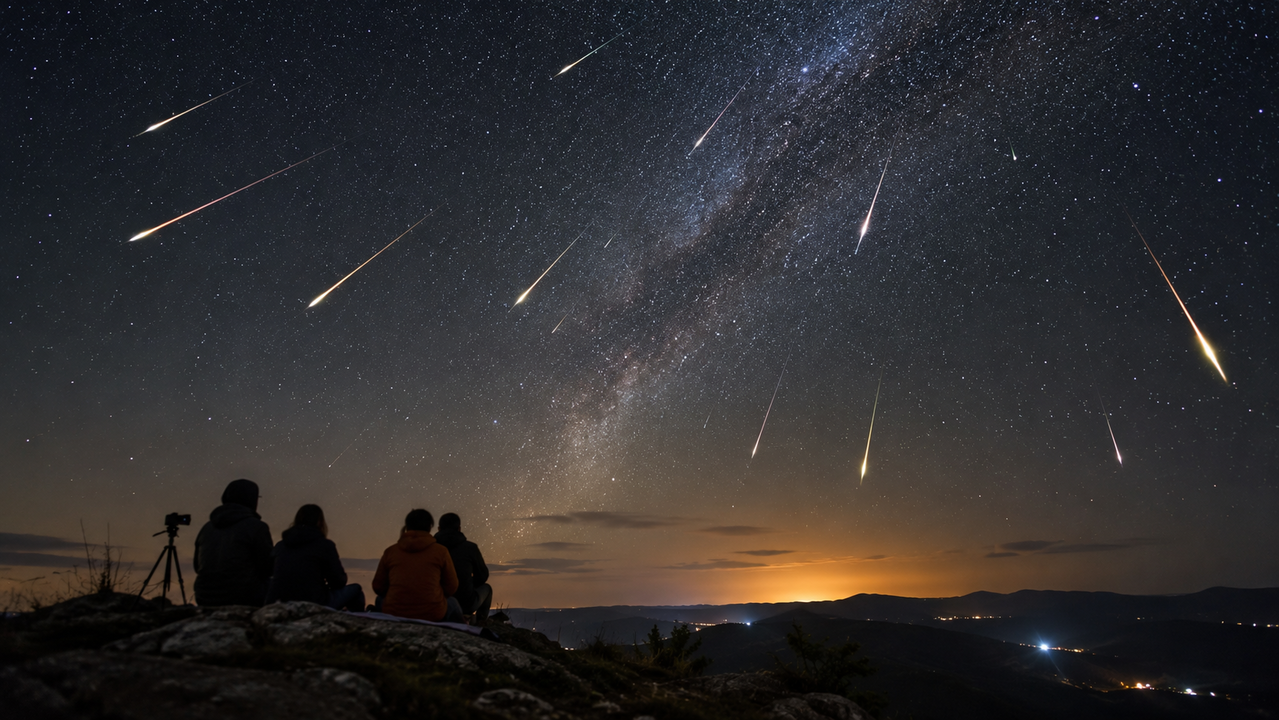
Perseid meteor shower set to dazzle with up to 100 shooting stars per hour
Translated from Turkish, summarized and contextualized by DistantNews.
At a glance
News
Sources not specified
Context piece
- The annual Perseid meteor shower will peak on the night of August 13-14, with up to 100 meteors visible per hour.
- Meteors, entering Earth's atmosphere at about 60 kilometers per second, will appear as "fireballs" due to friction.
- The Perseid shower, originating from debris left by Comet Swift-Tuttle, runs from July 17 to August 24, and this year's peak will not be affected by the new moon.
Stargazers are preparing for the annual Perseid meteor shower, which promises a spectacular display of celestial fireworks. The event, commonly known as "shooting stars," will reach its peak intensity on the night of August 13-14, offering observers the chance to witness up to 100 meteors per hour.
These meteors, fragments of rock and dust shed by Comet Swift-Tuttle, enter Earth's atmosphere at speeds of approximately 60 kilometers per second. The intense friction causes them to burn up, creating the dazzling streaks of light visible from the ground. Some of these brighter meteors are known as "fireballs" due to their intensity and duration.
The Perseid shower officially began on July 17 and will continue until August 24. This year's peak viewing period coincides with a new moon, meaning the absence of moonlight will enhance visibility, allowing for a clearer view of the celestial show. The comet responsible for the Perseids, Swift-Tuttle, has a nucleus measuring 26 kilometers in diameter and completes an orbit around the sun every 133 years.
Several observation events are being organized across Turkey to allow the public to enjoy the meteor shower. In Bursa, an observation event is planned for the evening of August 8 at Yeniköy Beach. Antalya is also hosting night walks and meteor observation activities organized by the Patika Nature Walking Group.
DistantNews Editorial
Originally published by Cumhuriyet in Turkish. Translated, summarized, and contextualized by our editorial team with added local perspective. Read our editorial standards.
More Stories



From Our Blog

What Gets Lost (and Found) When News Is Translated

The Critical Role of Diaspora Media in Global News

What Travellers Should Know About Countries with Restricted Press

A Digital Nomad's Guide to Following Local News

How the Same Story Looks Different in Different Countries
