

Peru Updates Food Labeling Rules; Nutritionist Calls for Broader Strategy
Translated from Spanish, summarized and contextualized by DistantNews.
At a glance
News
Sources not specified
New plan
- Peru has updated its food labeling regulations with new criteria for nutritional information presentation.
- The updated standard aims to make nutritional data more understandable for consumers at the point of purchase.
- While an advancement, a nutritionist notes that further strategies are needed to combat persistent nutritional issues like anemia and obesity.
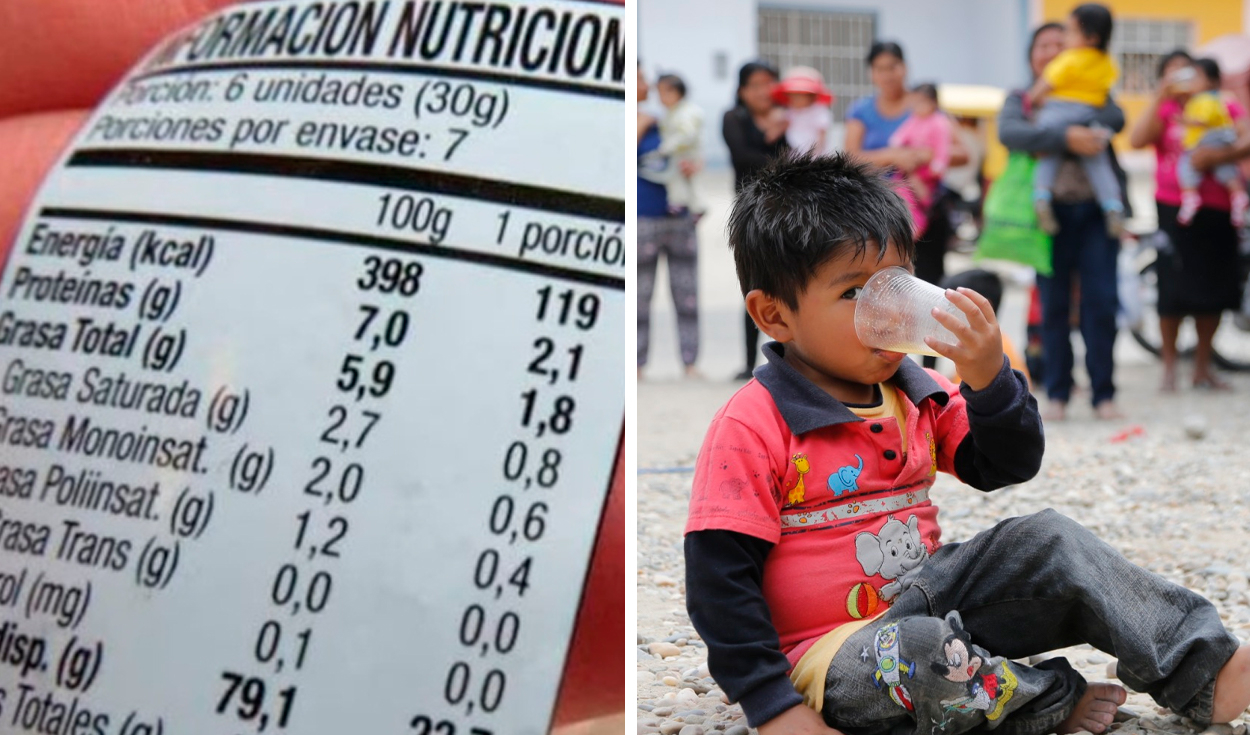
Peru has implemented new standards for food labeling, aiming to provide consumers with clearer and more comprehensible nutritional information. The National Institute for Quality (Inacal) approved the fourth edition of the Technical Standard Peruvian NTP 209.652:2025, titled “Packaged Foods. Nutritional Labeling.” This update standardizes how information on energy value, proteins, carbohydrates, sugars, fats, and sodium is presented.
The new regulations also cover the declaration of vitamins and minerals when official recommendations exist or when deemed relevant by authorities. This information will be displayed in easy-to-read tables, or linearly if the packaging dimensions do not permit a table format. Values can be expressed per 100 grams, 100 milliliters, per serving, or per package, facilitating comparisons between similar products.
Jessica Huamán, a nutritionist and former dean of the College of Nutritionists, views the update as a positive step forward, reinforcing consumers' right to know the exact contents of food products. However, she cautions that this updated labeling should be part of a broader strategy to address Peru's ongoing nutritional challenges, including anemia, obesity, and malnutrition.
It is a step because it guarantees that the population can identify which nutrients products may contain.
"It is a step because it guarantees that the population can identify which nutrients products may contain," Huamán stated. She also stressed the importance of ensuring that nutritional information is present on all products, including imports and those from small manufacturers, emphasizing that "it is a consumer's right to know what they are consuming."
The updated standard also includes mechanisms to verify the accuracy of the information provided by manufacturers, establishing tolerance margins between declared values and actual analysis results. Huamán pointed out that some products highlight certain features, like high fiber content, but may not provide sufficient detail about their overall composition. The new labeling system complements the existing front-of-package warning octagons, which alert consumers to critical nutrients exceeding established parameters.
It is a consumer's right to know what they are consuming.
DistantNews Editorial
Originally published by La República in Spanish. Translated, summarized, and contextualized by our editorial team with added local perspective. Read our editorial standards.
More Stories



From Our Blog

What Gets Lost (and Found) When News Is Translated

The Critical Role of Diaspora Media in Global News

What Travellers Should Know About Countries with Restricted Press

A Digital Nomad's Guide to Following Local News

How the Same Story Looks Different in Different Countries
