


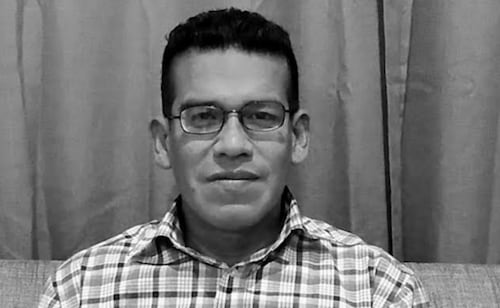
Peruvian writer David Antonio Silva Rojas wins Almadía Ventosa-Arrufat International Short Novel Prize
Translated from Spanish, summarized and contextualized by DistantNews.
At a glance
News
Named sources
New plan
- Peruvian writer David Antonio Silva Rojas won the first Almadía Ventosa-Arrufat International Short Novel Prize for his novel “Donde el agua trabaja” (Where the Water Works).
- The novel explores labor exploitation and vulnerability through the masterful use of silence, creating an oppressive atmosphere.
- Silva Rojas was inspired by a farmworker's words, aiming to give voice to those who enable Peru's agro-export success but remain unseen.
Peruvian author David Antonio Silva Rojas has secured the inaugural Almadía Ventosa-Arrufat International Short Novel Prize for his work “Donde el agua trabaja.” The jury lauded the novel for its profound exploration of labor exploitation and contemporary forms of vulnerability, highlighting silence as a central compositional element.
Cristina Rivera Garza, the jury president, described the novel as building an oppressive atmosphere of exploitation and unequal power dynamics between female laborers and their foremen. She praised its subtle language and brief sentences, likening them to the dripping of irrigation systems in vineyards, noting that the work avoids didacticism or declamation. Rivera Garza further elaborated on the narrative, which follows a young woman leaving her village for seasonal work as a harvester in a distant region. The jury emphasized the masterful use of silence, calling it the novel's most eloquent aspect, a bond between the narrator and her sole friend, a shield against injustice, and a pervasive presence that thickens the story's texture with an unnamed sense of dread.
Silva Rojas revealed that the novel's genesis came from a farmworker's quiet statement: “Many things happen here that nobody tells.” This resonated with him as he concluded an investigation into human trafficking for Peru's Ministry of Justice and Human Rights, where he witnessed hundreds of people waiting for buses before dawn to go to the fields. He felt compelled to write about the individuals whose labor underpins Peru's celebrated agro-export success but who are never the focus of the narrative.
The winning novel, chosen unanimously by the jury, comes with a 20,000 euro prize and will be published simultaneously in Mexico, Colombia, Argentina, Peru, and Spain, with digital publication across Latin America. Rivera Garza expressed confidence that the novel has a bright future and that it is fitting to launch a new prize with a work that so impressed the judges.
DistantNews Editorial
Originally published by El Universal in Spanish. Translated, summarized, and contextualized by our editorial team with added local perspective. Read our editorial standards.
More Stories



From Our Blog

What Press Freedom Means for the News You Read

What Gets Lost (and Found) When News Is Translated

The Critical Role of Diaspora Media in Global News

What Travellers Should Know About Countries with Restricted Press

A Digital Nomad's Guide to Following Local News
