


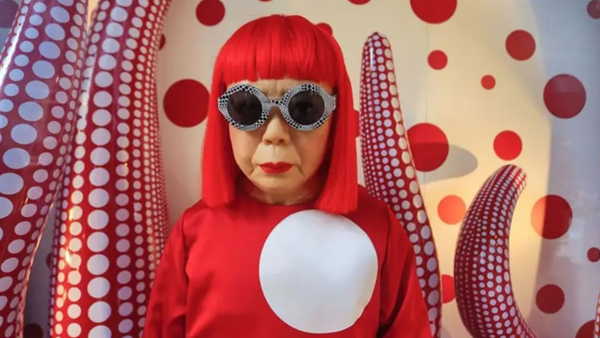
Pioneering Japanese artist Yayoi Kusama dies at 97
Translated from Turkish and summarized by DistantNews. Read the original for the full story.
At a glance
News
Official statement
Outcome reported
- Japanese avant-garde artist Yayoi Kusama, renowned for her polka dot motifs and immersive installations, has died in Tokyo at age 97.
- Kusama gained international fame later in life, becoming a global cultural icon after decades of being largely overlooked in the art world.
- Her career, spanning nearly 60 years between Japan and the U.S., was marked by groundbreaking work, including her 'Infinity Mirror Rooms,' and personal struggles with hallucinations that she channeled into her art.
Japanese avant-garde artist Yayoi Kusama, celebrated worldwide for her polka dot patterns and immersive installations, has died at the age of 97. Her company announced her passing with deep sorrow, stating, "We will keep Kusama's wishes alive and continue to give hope and strength to people around the world through art."
Known as the "Princess of Polka Dots," Kusama lived an extraordinary life. After being largely ignored by the art world for decades, she rose to become one of the most recognized artists globally and a cultural icon in her 80s and 90s. Her career, which spanned nearly 60 years, saw her move between Japan and the United States.
In the male-dominated art scene of 1960s New York, Kusama made waves with her phallic sculptures and frequent nude performances. Her "Infinity Mirror Rooms," created in 1965 using mirrors and lights to create an illusion of endless space, attracted millions of visitors and have recently gained significant traction on social media. However, she was troubled by the appropriation of her ideas and being cited as an "inspiration" by male contemporaries like Andy Warhol, Claes Oldenburg, and Lucas Samaras, whose works were exhibited in more prestigious galleries.
We will keep Kusama's wishes alive and continue to give hope and strength to people around the world through art.
Disheartened after years of watching male artists gain recognition for her concepts, she returned to Japan. She began treatment at a psychiatric institution, where she lived and worked for the remainder of her life. Fortunately, she found a hospital with doctors interested in art therapy, and she voluntarily admitted herself. This safe environment allowed her to resume creating art.
Her work in the 1970s and early 1980s featured unusually dark collage series that embraced imagery of natural life cycles. Kusama became the first Japanese artist to solely represent her country at the 1993 Venice Biennale. The exhibition's significant success marked a major turning point in her recognition both in Japan and abroad. One of her paintings sold for approximately $10.5 million at auction in 2022. Subsequently, her works have been exhibited in major museums and she has collaborated with luxury brands, including Louis Vuitton.
One day, after looking at the red flower pattern on the table, I saw the same red flower pattern on the ceiling, on the windows, and on the columns. The pattern filled the room and covered my body.
About this summary
Originally published by Cumhuriyet in Turkish. Translated, summarized, and contextualized automatically by DistantNews, with a note on how the source frames the story. Not individually reviewed before publishing. How this works.
More Stories


From Our Blog

What Gets Lost (and Found) When News Is Translated

The Critical Role of Diaspora Media in Global News

What Travellers Should Know About Countries with Restricted Press

A Digital Nomad's Guide to Following Local News

How the Same Story Looks Different in Different Countries
