

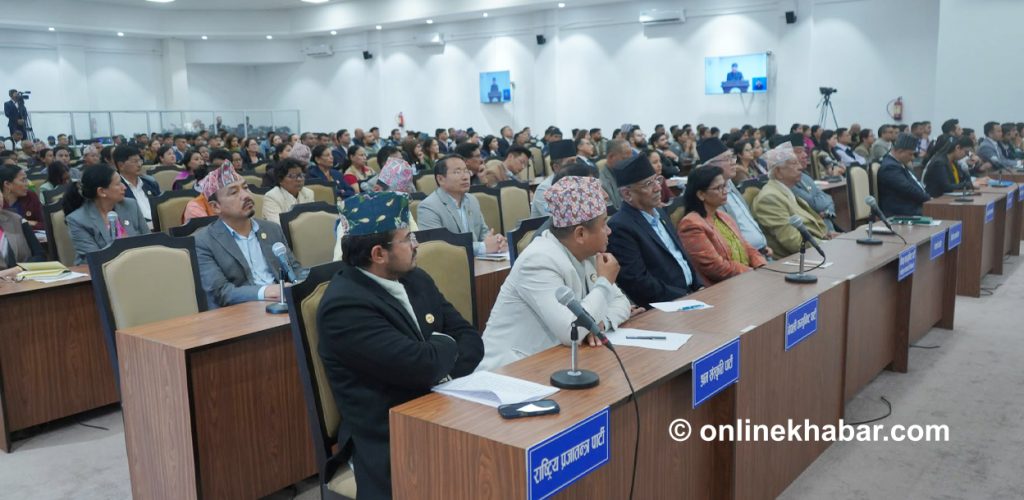

PM Shah addresses five queries over government’s handling of Bhotekoshi floods
Summarized by DistantNews. Read the original for the full story.
At a glance
News
Named sources
Ongoing story
- Prime Minister Balendra Shah defended the government’s response to the August 26 Bhotekoshi floods, saying authorities acted after receiving information and coordinated with provincial and local governments.
- He addressed questions about warnings, unidentified bodies, foreign assistance and rescue efforts for workers believed trapped in hydropower tunnels.
- The disaster killed and displaced people and caused extensive damage in Rasuwa and downstream districts, drawing criticism of the government’s response.
Prime Minister Balendra Shah faced Parliament’s questions over the government’s handling of the August 26 Bhotekoshi floods, as criticism continued over warnings, rescue work, relief and recovery.
Shah said the disaster exceeded what government agencies could reasonably forecast. He told lawmakers that security personnel went to warn downstream communities as soon as authorities received information about the approaching flood. Some of those personnel were swept away and remain missing.
This was a major event. It was beyond the scope of disaster forecasting.
He also defended the decision to bury unidentified bodies instead of keeping them in cold storage. Shah said authorities temporarily buried only bodies that could not be identified immediately, while preserving DNA samples and other evidence. Families will receive the remains once DNA matches are established, allowing them to carry out final rites according to their religious traditions.
The flood carried the bodies of those who died to different places.
Shah rejected suggestions that the government had delayed seeking foreign help. He said Nepal coordinated with the international community from the beginning and worked to speed up procedures for receiving assistance. Teams from India and China expressed interest in helping, but foreign experts reached affected areas only after conditions allowed helicopters to land and heavy equipment to operate. Initial teams conducted aerial assessments but could not land safely.
The prime minister also answered questions about the slow search for people believed trapped inside hydropower tunnels in Rasuwa and Nuwakot. The disaster killed and displaced people and caused extensive damage across Rasuwa and downstream districts, leaving the government under pressure to explain its response.
It was unthinkable for us not to seek foreign assistance during such a major disaster.
About this summary
Originally published by Kathmandu Post. Summarized and contextualized automatically by DistantNews, with a note on how the source frames the story. Not individually reviewed before publishing. How this works.
More Stories
From Our Blog

What Gets Lost (and Found) When News Is Translated

The Critical Role of Diaspora Media in Global News

What Travellers Should Know About Countries with Restricted Press

A Digital Nomad's Guide to Following Local News

How the Same Story Looks Different in Different Countries
