

PM Shehbaz briefs President Zardari on Pak-Saudi-Turkiye defence pact
Summarized and contextualized by DistantNews.
At a glance
News
Official statement
New plan
- Pakistan's Prime Minister Shehbaz Sharif briefed President Asif Ali Zardari on a new defense pact signed with Saudi Arabia and Turkiye.
- The tripartite agreement, signed on August 7, aims to strengthen collective deterrence and treats an attack on one signatory as an attack on all.
- The pact is defensive in nature and open to other regional countries, with Turkiye expecting Egypt to join in the next stage.
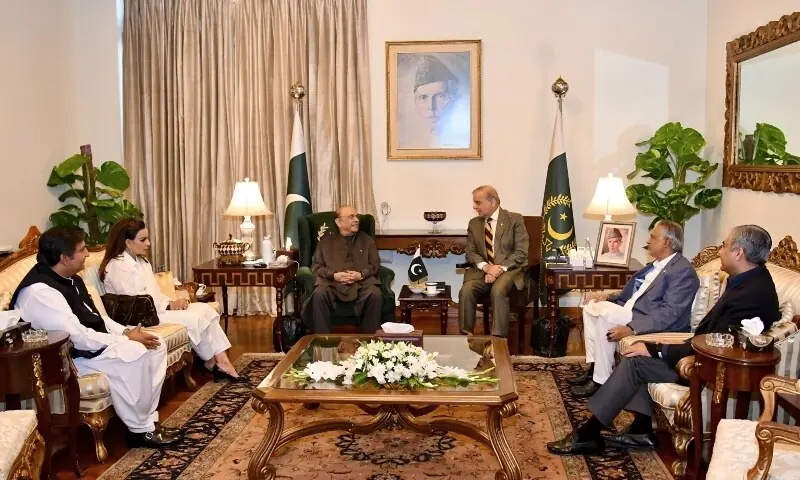
Prime Minister Shehbaz Sharif met with President Asif Ali Zardari in Islamabad to brief him on a recently established defense pact between Pakistan, Saudi Arabia, and Turkiye. The Presidency confirmed the briefing occurred Friday, detailing the significance of the tripartite agreement.
expressed his best wishes for the effective implementation of the tripartite agreement with regard to defence cooperation, regional peace and stability and promotion of the security of the Muslim ummah
President Zardari expressed his full support for the pact's effective implementation, emphasizing its role in defense cooperation, regional peace, stability, and the security of the Muslim world. He commended the efforts of Prime Minister Sharif and Chief of Defence Forces General Asim Munir in forging this robust strategic partnership, which builds upon long-standing fraternal relations.
The defense agreement, signed on August 7 in Makkah, is designed to enhance collective deterrence. A key provision states that an attack against any one of the signatory states will be considered an attack against all. The pact also includes plans for political and military mechanisms and aims to deepen cooperation in the defense industry, according to Turkiye's defense ministry.
further strengthening the longstanding fraternal relations between Saudi Arabia, Turkiye, and Pakistan into a robust strategic partnership
Both Prime Minister Sharif and Finance Minister Dar have stressed the pact's defensive nature. Dar added that it is open to any country in the region that adheres to its core principles. Turkiye's Foreign Minister Hakan Fidan indicated that Egypt is expected to join the alliance, pending the resolution of a few technical issues. While Egypt has not officially commented, Kuwait, Bahrain, and Somalia have welcomed the pact, and Iran has expressed a positive stance, advocating for regional security mechanisms based on cooperation.
a few technical issues
DistantNews Editorial
Originally published by Dawn. Summarized and contextualized by our editorial team with added local perspective. Read our editorial standards.
More Stories
From Our Blog

What Gets Lost (and Found) When News Is Translated

The Critical Role of Diaspora Media in Global News

What Travellers Should Know About Countries with Restricted Press

A Digital Nomad's Guide to Following Local News

How the Same Story Looks Different in Different Countries
