


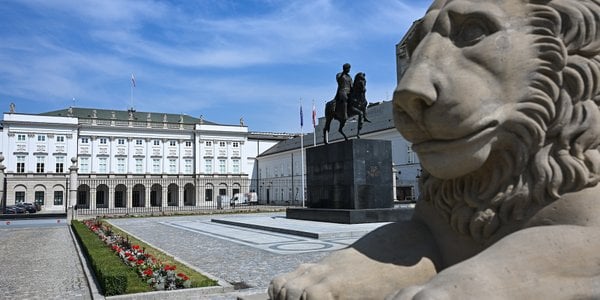
Poland: A Weak State Divided by Hostile Nations Faces Uncertain Future
Translated from Polish, summarized and contextualized by DistantNews.
At a glance
Analysis
Sources not specified
Context piece
- Contemporary Poland is described as a weak state with two hostile nations, struggling to learn from its past while facing an uncertain future.
- The author criticizes the degradation of state institutions, arguing they now serve political conflict rather than citizens.
- Poland's current political culture, marked by mutual hatred and an inability to form tactical agreements, leaves it vulnerable to external threats and risks losing its freedom.
Marek A. Cichocki contends that modern Poland is characterized by a weak state and two deeply antagonistic nations, a condition that leaves its future uncertain. While readily critiquing the historical failings of the First and Second Republics, Poles are less inclined to assess their own achievements over the past 35 years. The author questions whether the current political entity is more durable or powerful than its predecessors, especially given that it has not yet faced the ultimate test of survival: direct existential threat in the form of armed conflict.
Despite this, the structure of the Third Republic has proven surprisingly conducive to economic and social development over the last three decades. It has also weathered systemic crises like the Western financial collapse, the pandemic, and the war in the East. However, Cichocki warns that this resilience may not suffice in a true moment of trial. He identifies state-builders, those advocating for strong and independent state structures, as the greatest losers of the Third Republic. Institutions such as the judiciary, prosecution, education, administration, public media, and diplomacy have gradually ceased serving the state and its citizens, instead becoming arenas for political conflict.
Although many Poles express fatigue with political polarization, they have failed to create effective alternative representation. Consequently, fueling conflict between the two hostile "nations" remains the primary strategy for unscrupulous, cynical leaders to gain and consolidate power. Cichocki anticipates more challenging times ahead, suggesting that a weak state and divided populace in a world increasingly prone to violence and the disregard of common rules could easily become a victim.
The prevailing political culture, defined by mutual hatred and an inability to forge even tactical agreements, closes off the path to building a strategy for collective survival. This, in turn, opens the door to actions by external adversaries. The ultimate risk, Cichocki concludes, is the potential loss of what is most crucial for a political community: the freedom to independently shape its own future.
DistantNews Editorial
Originally published by Rzeczpospolita in Polish. Translated, summarized, and contextualized by our editorial team with added local perspective. Read our editorial standards.
More Stories


From Our Blog

What Gets Lost (and Found) When News Is Translated

The Critical Role of Diaspora Media in Global News

What Travellers Should Know About Countries with Restricted Press

A Digital Nomad's Guide to Following Local News

How the Same Story Looks Different in Different Countries
