

Poland Becomes Europe's Logistics Hub as Port of Gdansk Sees 9% Cargo Increase
Translated from Polish, summarized and contextualized by DistantNews.
At a glance
News
Named sources
New plan
- Port of Gdansk strengthened its position as a key Baltic Sea logistics hub, handling 41.7 million tons in the first half of the year, a 9% increase year-on-year.
- Poland's central location, combined with infrastructure investments like TEN-T corridors and new road/rail routes, enhances its role in global supply chains.
- The port is increasingly serving as a distribution hub for goods from Asia, particularly China and ASEAN countries, to Central and Eastern Europe.
The Port of Gdansk is solidifying its status as a crucial logistics center in the Baltic Sea region, with cargo handling reaching 41.7 million tons in the first half of the year. This represents a significant 9% increase compared to the same period last year, underscoring its growing importance in the European economy.
We see great potential in further strengthening the position of the Port of Gdansk – the sixth-largest port in the European Union, playing an increasingly important role in the global maritime economy and international supply chains.
Dorota Pyć, President of the Port of Gdansk Authority, highlighted the port's potential to further strengthen its position. As the sixth-largest port in the European Union, Gdansk plays an increasingly vital role in global maritime trade and international supply chains. Import volumes reached 27.8 million tons, with liquid fuels accounting for 12.6 million tons, while export volumes stood at 8.3 million tons, dominated by general cargo.
Polish seaports play a significant role in choosing warehouse locations, as they systematically increase their capacity.
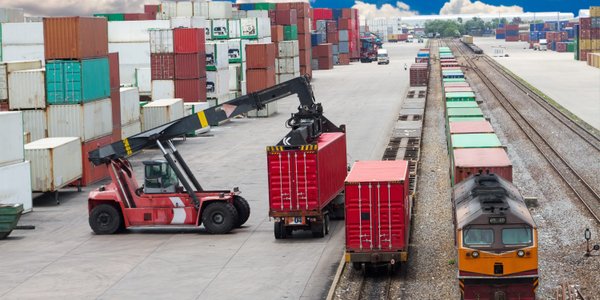
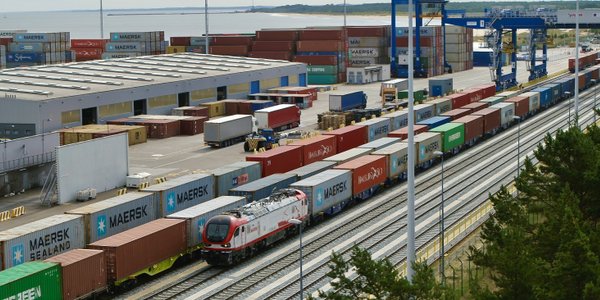
Poland's strategic central location between Western and Eastern Europe continues to be a key advantage for its logistics sector. Investments in infrastructure, including the development of TEN-T corridors, new road networks like Via Carpatia, and expanded rail infrastructure and intermodal terminals, further bolster this position. These improvements are attracting international companies, with Danish firms, for example, increasingly locating hubs in Poland to serve European markets via road transport through Germany.
Increasingly, they are locating hubs in Poland, serving markets using road transport through Germany.
Container transport from China to Poland saw a substantial increase of over 45% in the first half of the year, reaching 160,400 TEU, compared to 180,150 TEU for the entire EU. Piotr Szałkiewicz, European Road Network Director at Rohlig Suus Logistics, noted that while China remains a key EU trading partner, countries in the ASEAN region are gaining prominence. Central and Eastern European countries are emerging as natural gateways for these trade flows, with further distribution heavily reliant on road transport. This makes the CEE region a continental distribution hub, efficiently serving markets from Scandinavia to the Balkans.
Independent of whether cargo reaches Europe by sea, for example via the Baltic and North Sea ports, or by land – by train and truck – further distribution relies primarily on road transport.
DistantNews Editorial
Originally published by Rzeczpospolita in Polish. Translated, summarized, and contextualized by our editorial team with added local perspective. Read our editorial standards.
More Stories


From Our Blog

What Gets Lost (and Found) When News Is Translated

The Critical Role of Diaspora Media in Global News

What Travellers Should Know About Countries with Restricted Press

A Digital Nomad's Guide to Following Local News

How the Same Story Looks Different in Different Countries
