


Poland Faces Rising Waste Fees as Deposit System Drains Municipal Revenue, ROP Law Delayed
Translated from Polish, summarized and contextualized by DistantNews.
At a glance
News
Named sources
Context piece
- Poland's municipalities face rising waste disposal costs due to a new deposit-refund system for plastic and metal containers, which began reducing their revenue from selling recycled materials.
- A planned government law on Extended Producer Responsibility (ROP), intended to compensate for these losses, is delayed, with no chance of passage this parliamentary term.
- Municipalities may be forced to increase waste collection fees for residents as a result of the reduced income and the unchanged costs of waste management.
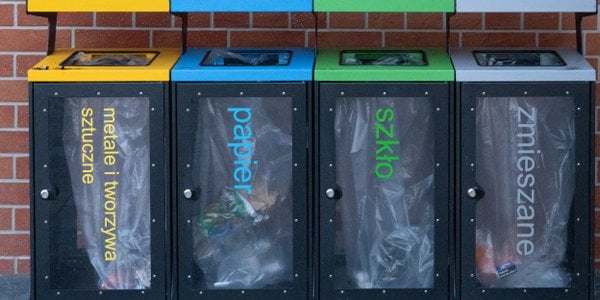
Polish municipalities are bracing for increased waste disposal fees as a new deposit-refund system, set to fully operate from early 2026, has already begun to erode their income from selling recycled plastics and metals. The system, theoretically launched on October 1, 2025, has significantly impacted municipal budgets by diverting revenue streams that previously supported waste management operations.
Compounding the issue is the government's failure to enact a crucial law on Extended Producer Responsibility (ROP). This legislation was designed to generate funds from producers to offset the revenue shortfall municipalities are experiencing. However, according to unofficial reports, there is no prospect of the ROP bill being passed before the current parliamentary term concludes. Opposition from entities like the Ministry of Agriculture and various business organizations, who criticize the Ministry of Climate and Environment for favoring a centralized and unfavorable ROP model, is cited as the reason for the delay.
Piotr Szewczyk, president of the Regional Council of Municipal Waste Processing Installations (RIPOK), estimates that municipal facilities lost approximately 50% of their revenue from selling raw materials in the first half of 2026 due to the deposit system. Concurrently, the cost of waste management has risen by about 15%. Szewczyk refutes claims that the deposit system has reduced the overall volume of waste collected by municipalities, stating that while the weight of "yellow bags" has decreased slightly, the most valuable materials, PET bottles and metal cans, have been removed. The value of metal cans alone, reaching up to 9,000 Polish zlotys per ton, represents a significant loss.
Marek Wójcik, a legislative representative for the Union of Cities of Poland, confirmed that municipalities have long awaited the ROP legislation. He warned that without it, local governments will likely have to raise waste collection fees for residents. Wójcik highlighted that municipalities are already feeling the pinch from the deposit system's impact on revenue from materials like PET bottles. He also noted a decrease in the efficiency of municipal waste companies' operations, independent of the municipalities themselves. Wójcik illustrated the problem by explaining that while a smaller municipality might have sent one truck per month to collect plastic, they now collect only a third of that amount but still must maintain the same frequency of collection, as they cannot reduce services for residents.
To nieprawda, ponieważ tzw. żółte worki straciły zaledwie 3-4 proc. ze swej masy. Wyjęto z nich natomiast dwa najcenniejsze surowce, czyli butelki PET i metalowe puszki. Zwłaszcza ta ostatnia, której wartość osiąga aż 9 tys. zł za tonę stanowi ważne źródło utraconych dochodów systemów gminnych
DistantNews Editorial
Originally published by Rzeczpospolita in Polish. Translated, summarized, and contextualized by our editorial team with added local perspective. Read our editorial standards.
More Stories


From Our Blog

What Gets Lost (and Found) When News Is Translated

The Critical Role of Diaspora Media in Global News

What Travellers Should Know About Countries with Restricted Press

A Digital Nomad's Guide to Following Local News

How the Same Story Looks Different in Different Countries
