


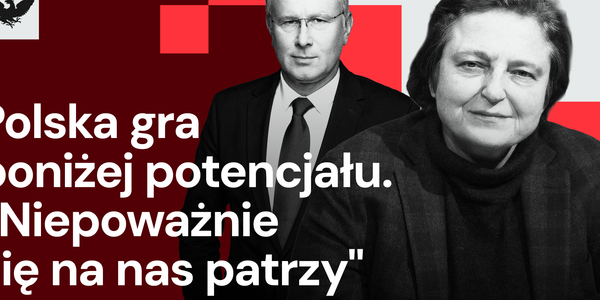
Poland hosts major donor conference amid political strife, but business thrives
Translated from Polish, summarized and contextualized by DistantNews.
At a glance
News
Named sources
Context piece
- Poland successfully hosted a major international donor conference in Gdańsk, showcasing its organizational capabilities despite internal political disputes.
- The event was overshadowed by a dispute between the Polish president and prime minister, leading to the absence of both leaders and Ukrainian President Zelenskyy.
- Despite the political friction, the conference achieved significant political and economic outcomes, with business leaders signing contracts and forging partnerships.
Poland demonstrated its organizational prowess by successfully hosting a major international donor conference in Gdańsk, an event that drew top global leaders and business figures. The conference, an annual gathering of G7 and donors previously held in cities like Lugano, Berlin, and Rome, presented Poland with a significant opportunity to project an image of a serious and well-organized nation on the world stage.
We fell on our feet, but Zelenskyy was missing.
However, the event was marred by internal political discord, specifically a public dispute between the Polish president and prime minister. This "Polish-Polish" conflict, as described by an expert, led to the absence of both the Polish president and Ukrainian President Zelenskyy, a situation that drew bewilderment and commentary from international observers. The expert noted that while internal political divisions, or "cohabitation," occur in other countries, such a public spat over foreign policy interests is unusual and detrimental to the nation's image.
It's not good that Poland showed itself to the world as a country internally divided.
Despite the political drama, the conference itself was deemed a success, yielding substantial political and economic results. Contracts were signed, and numerous public and private companies engaged in discussions. The presence of European leaders, including Ursula von der Leyen and Chancellor Scholz, alongside regional heads of state, created a conducive environment for business. The expert suggested that the absence of Zelenskyy, while a missed opportunity to elevate the event's profile, paradoxically calmed the situation by shifting the focus away from political narratives and towards business outcomes. The initial Ukrainian decision to name a unit after a controversial historical figure and Poland's subsequent reaction were seen as calculations aimed at domestic audiences, ultimately overshadowing the broader international objectives.
The world watched the Polish-Polish dispute with astonishment, and comments appeared asking directly what is actually happening between the two camps.
DistantNews Editorial
Originally published by Rzeczpospolita in Polish. Translated, summarized, and contextualized by our editorial team with added local perspective. Read our editorial standards.
More Stories

From Our Blog

What Gets Lost (and Found) When News Is Translated

The Critical Role of Diaspora Media in Global News

What Travellers Should Know About Countries with Restricted Press

A Digital Nomad's Guide to Following Local News

How the Same Story Looks Different in Different Countries
